1961 – AUSTIN-HEALEY  3000 MkI

Intensively restored 3-litre Healey of the first series with overdrive, chrome spoke wheels and further extensive special equipment !


INQUIRY ABOUT THIS VEHICLE

Now 70 years ago, Donald Healey presented his roadster at the London Motor Show and landed a huge success – the car was officially named the Austin-Healey 100 through a cooperation agreement hastily concluded by the chairman of the British Motor Corporation. Later, the sports car received an in-line six-cylinder (100-Six), which then became the “3000” in 1959 by means of an increase in displacement to 2,912 cc and delivered powerful torque. The 124 hp of the Mk I were good for a top speed of well over 180 km/h – which you had to dare to achieve in the open sports car…

INQUIRY ABOUT THIS VEHICLE

Like its predecessors, the “3000” was still equipped with a thin folding top and side windows with sliding device, but now offered disc brakes by Girling, at least on the front axle, which could passably brake the impetuous forward momentum of the six-cylinder. For an extra charge, an overdrive gearbox by Laycock-de Normanville was available, which also featured on this example and noticeably lowered the revs in 3rd and 4th gear. Those who spent another 22 GBP on top of the then basic price of 1,175 English pounds also got a heater – a real comfort feature in the rustic British roadster…


INQUIRY ABOUT THIS VEHICLE

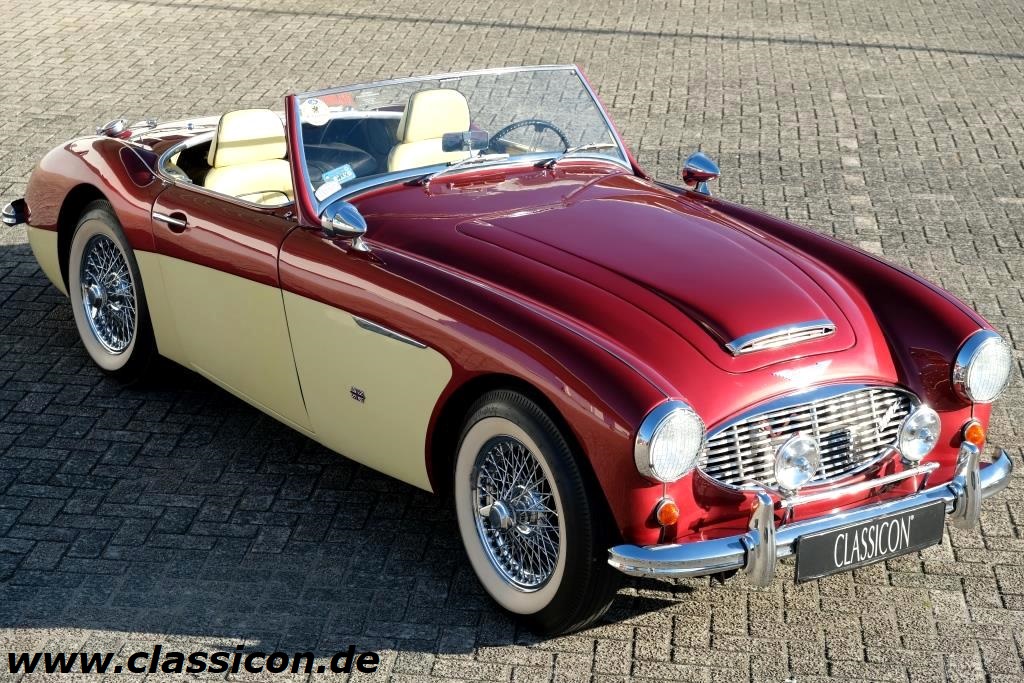
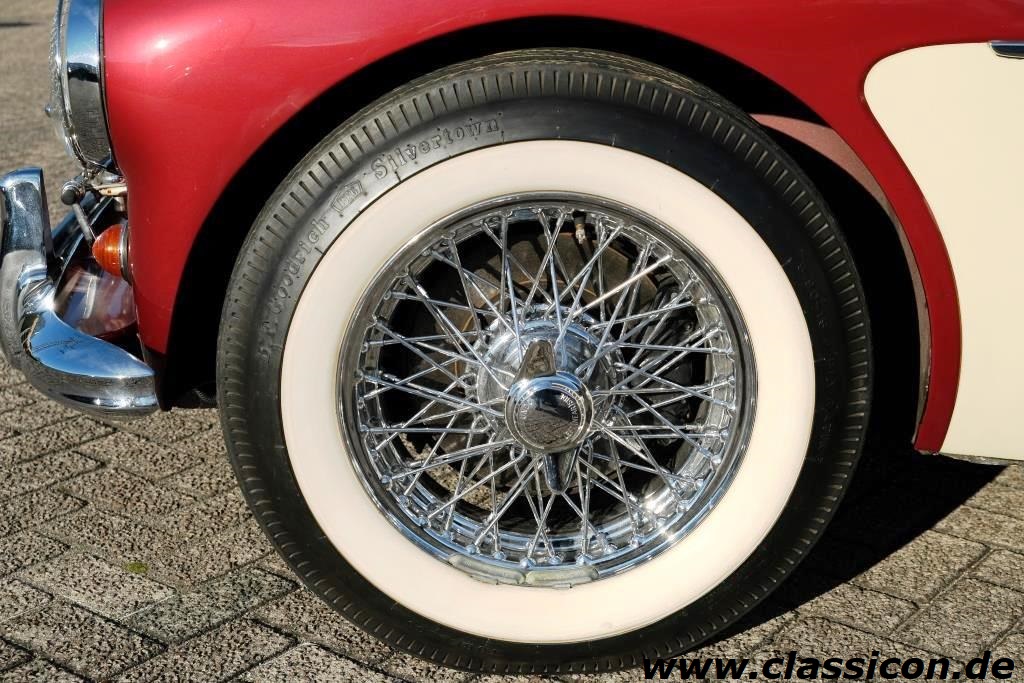
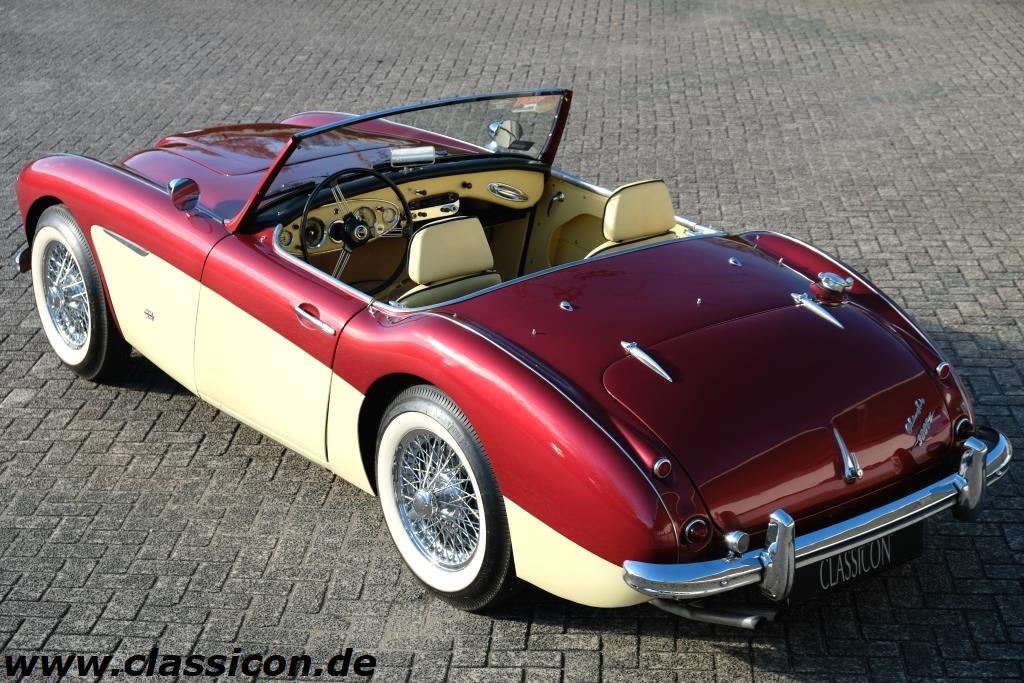
This vehicle was completely restored a few years ago by an expert hand and is still in very attractive condition today. The dark red paintwork is set off in ivory, which gives the car an optical lightness and also increases its attractiveness. In combination with the numerous additional chrome parts – starting with the spoked wheels with central locking, the badge bar with additional headlights, the Talbot mirrors and the lamp grilles – the Healey has a high-quality appearance, which is further enhanced by the wide white wall rings of the tyres.

INQUIRY ABOUT THIS VEHICLE

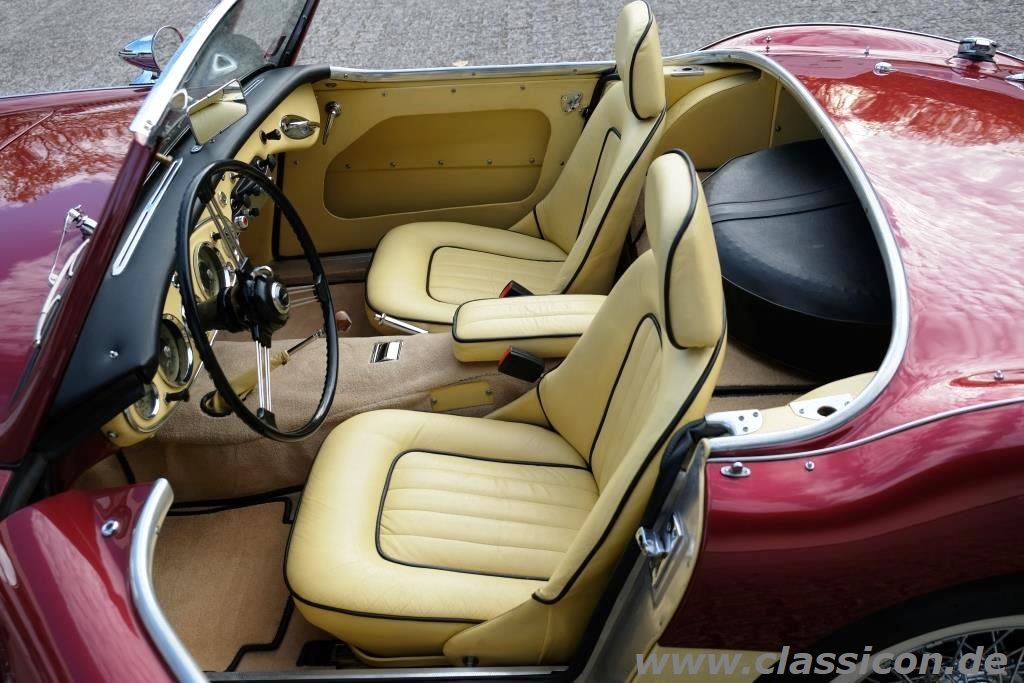
The interior is dominated by light leather with dark-coloured piping. The seats have been retrofitted with headrests, which – like the retrofitted seat belts – make a lasting contribution to passenger safety. The two-seater’s dashboard is dominated by two main instruments – flanked by small gauges on the left and right – and the spring-spoke steering wheel made of Bakalite, which has the control function for the turn signals above the horn button. The passenger compartment is fully lined with chained carpets perfectly colour-coordinated with the seats, while the spare wheel is in a protective cover for the best possible weight distribution just behind the seats above the axle.

INQUIRY ABOUT THIS VEHICLE

The three-litre power unit is supplied by two SU carburettors of the HD6 type, which mobilise 226 Nm of torque already at around 2,700 rpm – with this drive, the Healey could also convince in countless contemporary and current assignments in rally sport. The extras of this 3000 also include a hardtop and a luggage rack, so that the car is also optimally equipped for touring. The Healey comes from a large foreign collection and is delivered with a new MOT with historic license plates, a major service and a current value appraisal in which the convincing condition is recorded.

The Austin-Healey roadsters have always been popular representatives of their kind – after all, they stand for British driving culture in its purest form! As an affordable alternative to Jaguar’s XK models, they rightly have a regular place in many garages around the globe. This example from the first series of the 3-litre models with the beautiful cross-braced radiator grille offers a sustainable restoration and the best equipment at a very fair price/performance ratio – your wife will have to come up with some good counter-arguments first…

1974 – BMW  3,0 CSi

BMW 3.0 CSi imported from Sicily with very good body condition, new interior and well maintained mechanics.


ANFRAGE ZU DIESEM FAHRZEUG

At the end of the 1960s, BMW began its rise to become an established premium manufacturer and the six-cylinder engine (internally named M30) with 3 litres of displacement played a significant part in this. As the successor to the 2800 CS, which had been on the market since 1968, the new fuel-injected coupé offered a whopping 200 hp and turbine-like torque of 272 Newton metres. If required, the car accelerated from a standstill to 100 km/h in just 7.7 seconds and was also on a Porsche 911 level with a top speed of 220 km/h. The E9’s twin headlights lent the design the sportiness that the original design in the 2000 CS still lacked to some extent.


ANFRAGE ZU DIESEM FAHRZEUG

According to the BMW Classic certificate, this example was manufactured in September 1973 and delivered to BMW Italia S.p.A. in Verona at the end of October of the same year. The first registration of the vehicle took place in January 1974 in Ragusa, Sicily, where the CSi remained until it was exported to Germany in the summer of 2015. The original registration document from Italy (Carta di Circolazione) is still available and also documents the changes of ownership that took place prior to the full MOT inspection in Germany. Since February 2016, the car has been registered to the same owner in Hamburg.


ANFRAGE ZU DIESEM FAHRZEUG

Due to the climatic conditions in Sicily, the body condition of this E9 is far above average and, according to the findings of a renowned service company for classic cars, where the regular maintenance of the vehicle took place, it has not been subsequently welded – which is very rare for the bodies produced at the Karmann factory! All the neuralgic corrosion points of the series are still very solid and original on this car – which also applies to the particularly vulnerable shock absorber mounts. The Coupé has only been partially repainted and shows minor signs of use on individual trim strips.


ANFRAGE ZU DIESEM FAHRZEUG

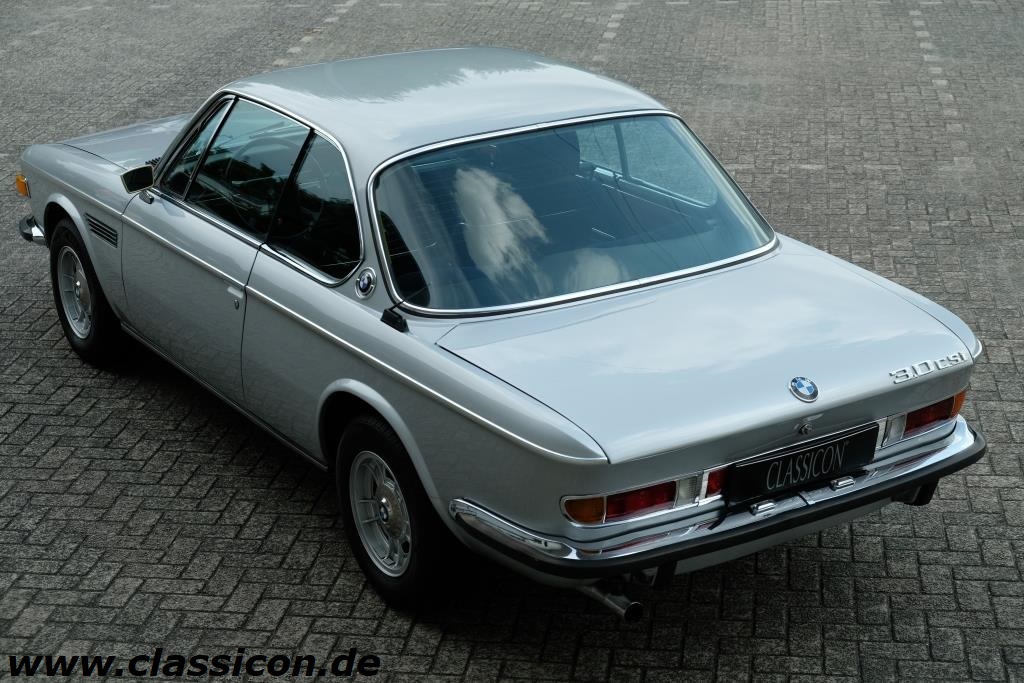
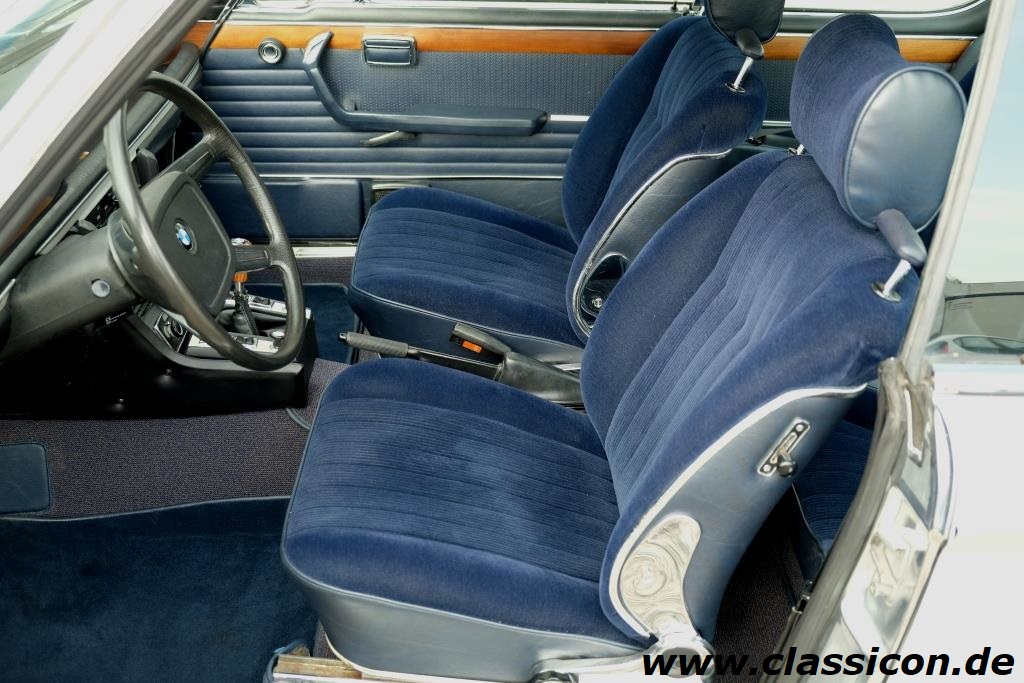
The colour glazing underlines the presence of the car, which is painted in “polaris silver” in a way that is as timeless as it is classic. The perfectly matching dark blue interior was able to withstand the intense southern Italian sun for a long time, but was then completely restored by an upholsterer in the winter season 2016/17. The seat upholstery was newly made and the velour covers were renewed in original quality. The carpets were also professionally made, so that the interior now appears true to the original and unused. The dashboard is still adorned with the original wooden parts.


ANFRAGE ZU DIESEM FAHRZEUG

The CSi was serviced at a specialist garage for BMW vehicles and also received additional inner mudguards there right at the beginning of its time in Germany to protect it from stone chips and to preserve its excellent substance. Just this summer, the entire exhaust system was replaced, as can be seen from the available invoices. Also just recently, a new MOT inspection took place, which the car passed without any defects, as expected. Due to its high authenticity, the vehicle also has a historic car registration, of course.

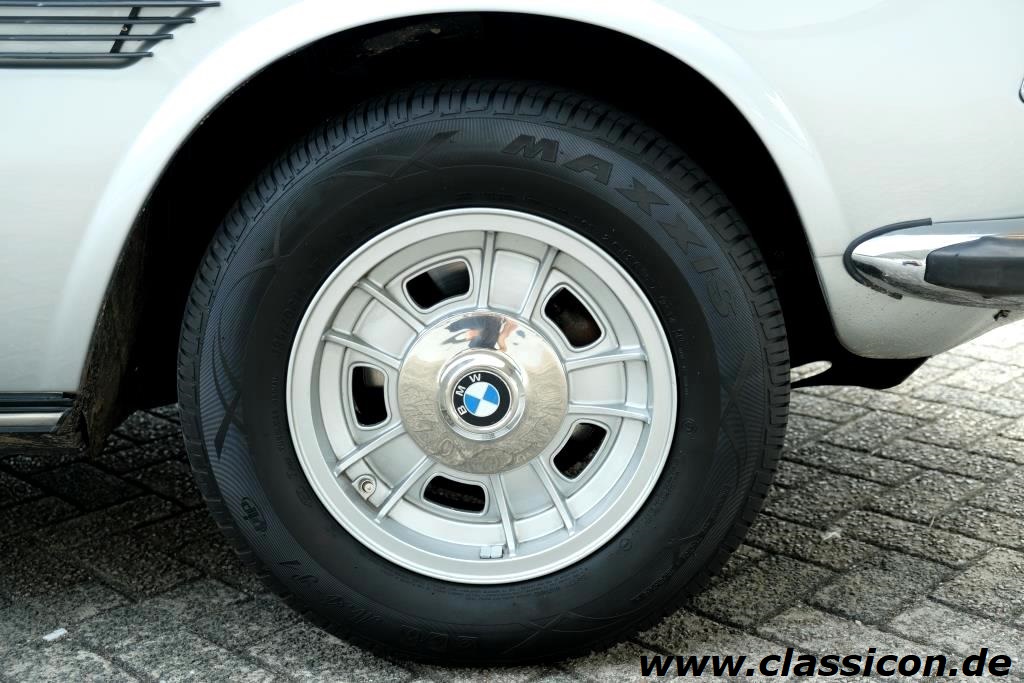
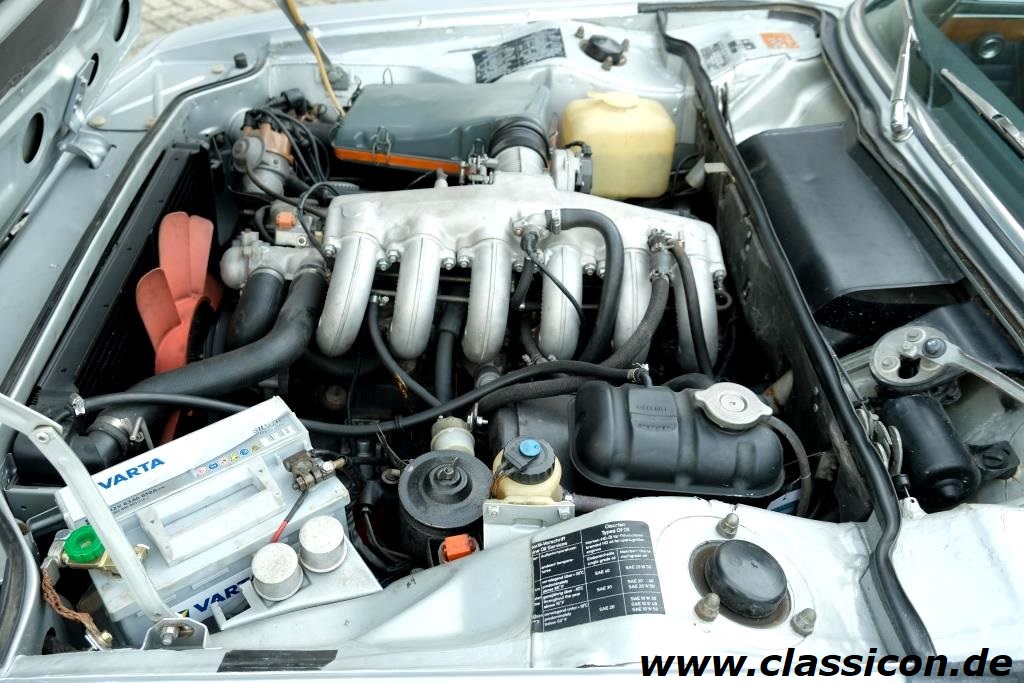
The 3.0 CSi impresses with its very successful design of the light-looking roof structure and the extensive glazing. In combination with one of the best engines ever designed by BMW, the 8,144 units built have long since become a sought-after classic with sporty performance. Finding a substantially sound example in a pleasing colour combination and with perfect maintained mechanics is the real art – shortcut your way and let this car convince you.

1988 – BMW  M3 Evolution II

Elaborately by a BMW specialist restored M3 Evo II (E30) with sports suspension and low mileage in “macaoblau metallic”!


INQUIRY ABOUT THIS VEHICLE

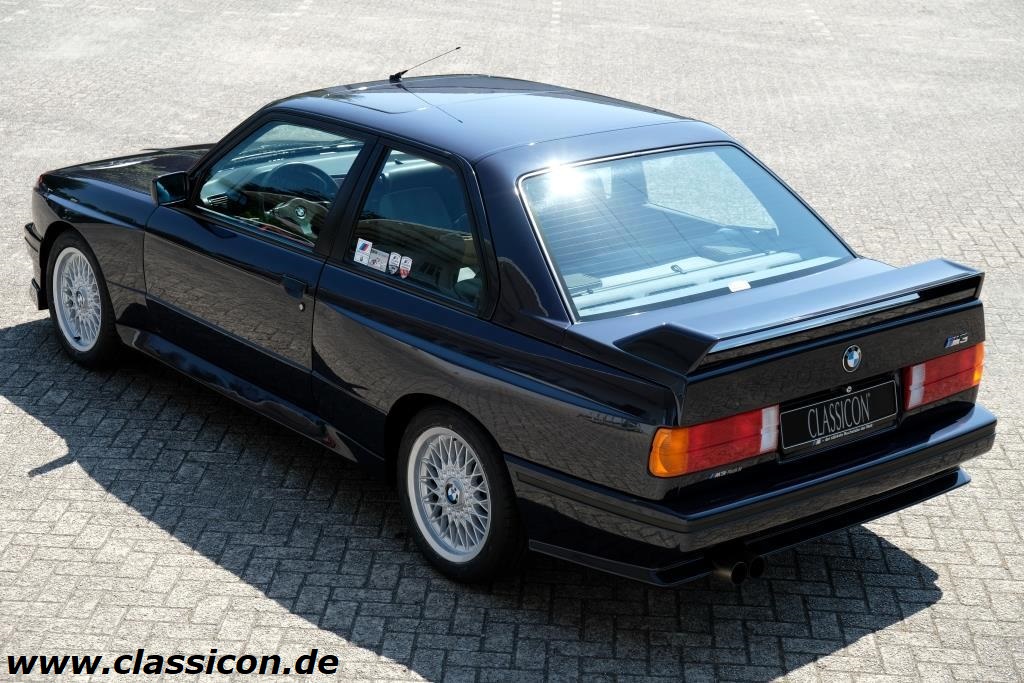
The M3 has been synonymous with performance in the touring car segment ever since its market launch in 1985. As a homologation model for the DTM, it was manufactured by the BMW subsidiary “M GmbH”. The original form of the basic E30 variant was significantly modified to increase its racing suitability: with wing extensions, spoilers, sill panels and a different boot lid, the driving dynamics were optimised as best as possible. With their high-revving four-cylinder, four-valve engines, the M3s were very successful in motorsport and are still extremely popular today.


INQUIRY ABOUT THIS VEHICLE

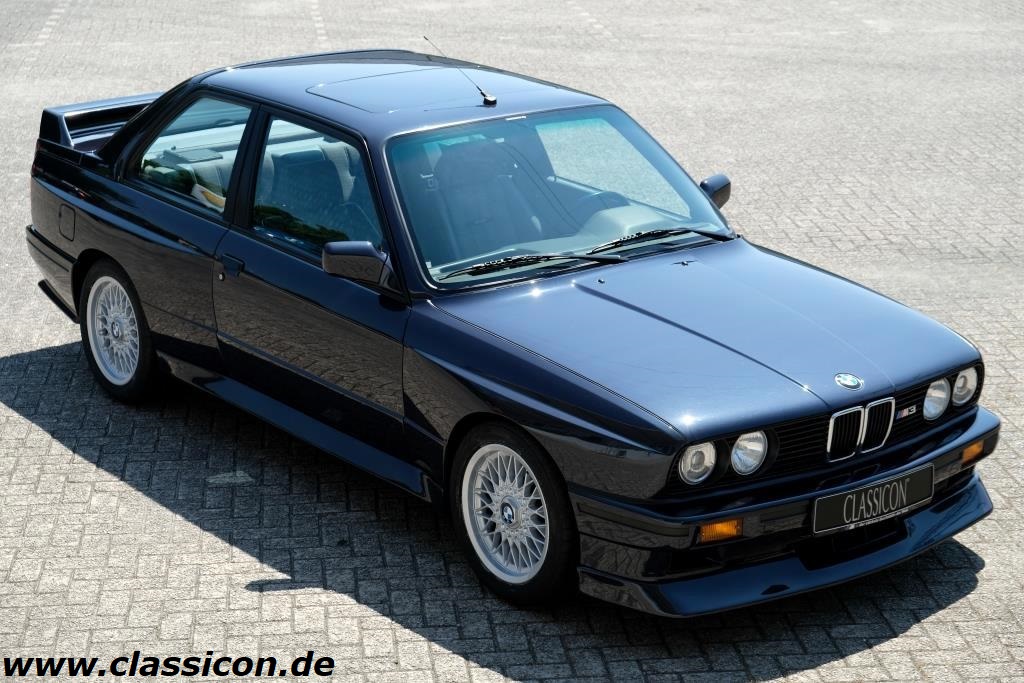
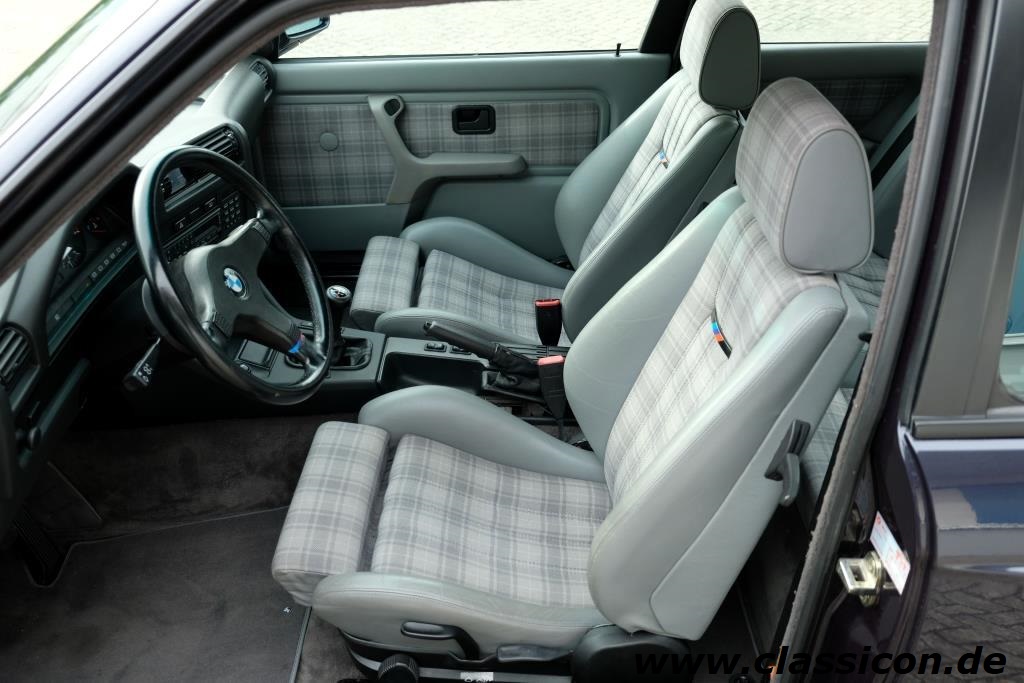
The successes in racing were an opportunity for the marketing department and were celebrated with limited special models: the “M3 Evolution II”, which was available from 1988 onwards, produced an impressive 220 hp from the factory-named S14 engine and was produced in 500 numbered units. The fewest of these were painted in the wonderful “macaoblue metallic”, which gives the car an aura that is both noble and sporty. This example is number 156 of 500, as the factory plaque in the centre console indicates, and combines the dark blue exterior paint with a light grey partial leather/fabric interior.


INQUIRY ABOUT THIS VEHICLE

According to the present BMW Classic certificate, the vehicle was produced on May 17th, 1988 and then delivered in Bielefeld. The optional equipment included an electric sunroof and window lifts, heated seats and a rear roller blind as well as a board computer, the BMW Bavaria C radio with roof aerial and cassette holder and the BMW sound system – which also makes it clear that this car was not(!) configured for hobby racing drivers. The first owner kept the car until July 1994, before it changed hands to the next owner. In autumn 2012, the current owner began an extensive restoration of the car by a BMW specialist, which lasted until the end of 2014.


INQUIRY ABOUT THIS VEHICLE

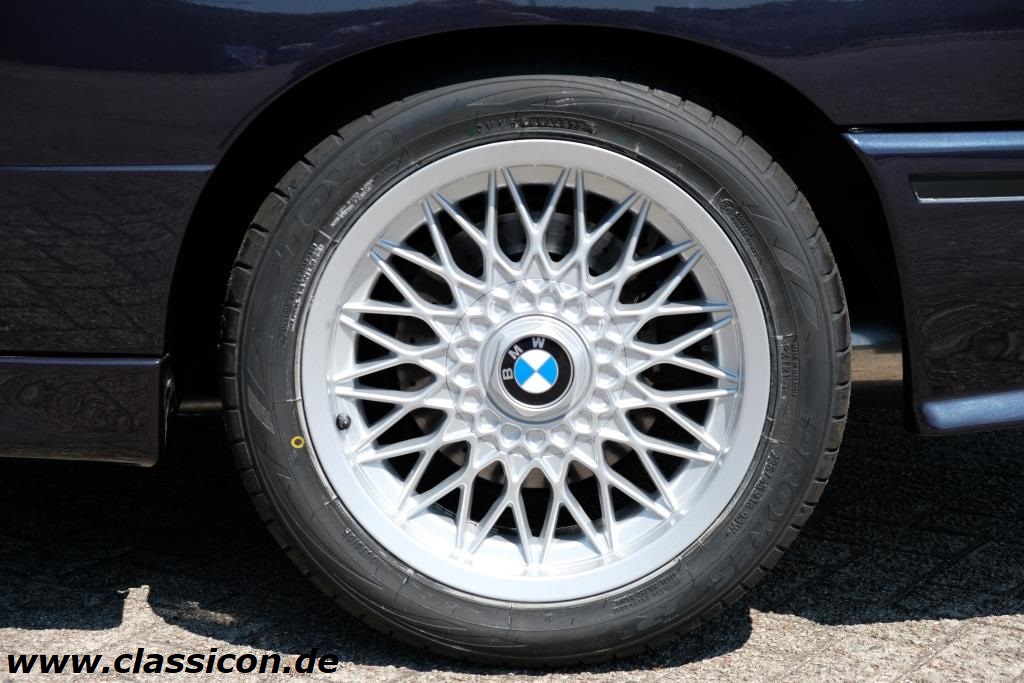
The phases of the restoration are documented with approx. 500 photos. In January 2015, the M3 was appraised by an expert who gave the car a grade of 1- due to the high quality of the work. Since then, about 8,500 km have been covered, resulting in a total mileage of just above 97k kms. The car rolls on fully restored genuine alloy wheels with all new tyres 225/45 R16, which gives the car the best possible presence – whereby an optional mint set of high gloss turned BBS wheels is available as a contemporary extra at extra cost.


INQUIRY ABOUT THIS VEHICLE

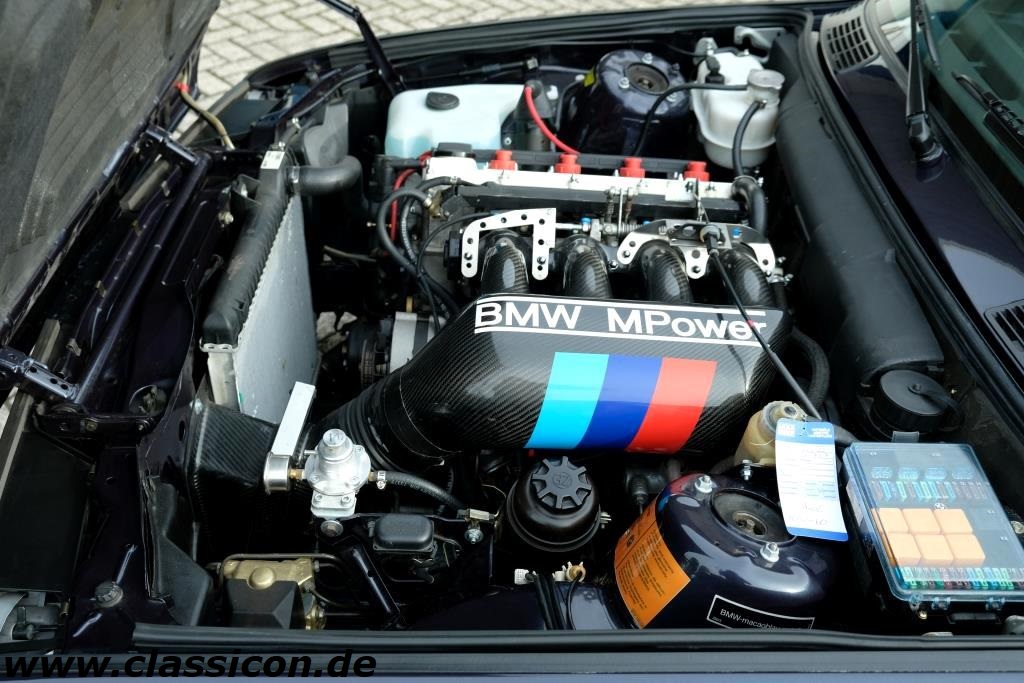
Deviating from the standard condition, this M3 has a suspension by AC Schnitzer, combined with H&R stabilisers and a stainless steel rear silencer by Eisenmann. A digital auxiliary instrument – perfectly integrated into a ventilation flap – also provides information on the oil pressure and temperature of the engine and differential as well as the battery voltage. The engine, which was partially overhauled during the restoration, also has a fan-shaped manifold and a carbon air collector. This means that this car leaves nothing to be desired and is a rare option, especially for BMW-affine collectors.

The cult of the M3 model of the E30 series has sparked a new hype with the auction result of over US$ 250,000 for a “Sport Evolution” in January 2021. This BMW has long been an automotive icon that has not been matched by its successors, despite larger engines with 6 and 8 cylinders. Far too good for the racetrack, this example offers highly interesting equipment for use on the road and presents itself in top condition throughout – a picture-perfect rarity with low mileage that you should secure right now!

2001 – BMW  Z8

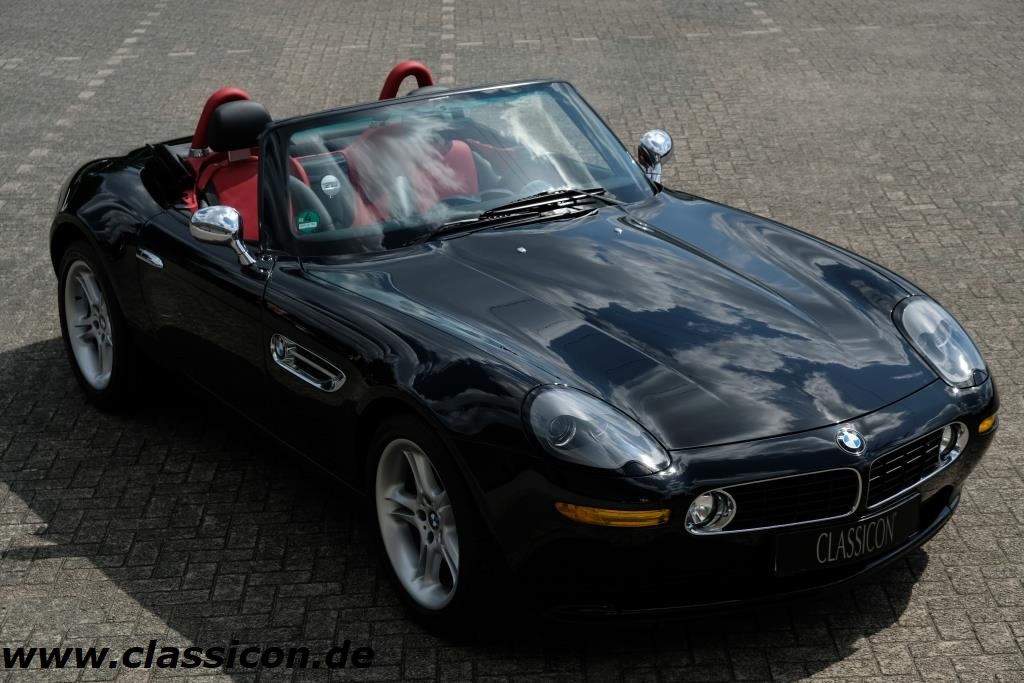
Black BMW Z8 with performance package, stainless steel exhaust and very low mileage in genuine year-old car condition with new MOT.


INQUIRY ABOUT THIS VEHICLE

Two decades ago, BMW brought the retro roadster Z8 onto the market, after the study of the later series model had already been presented at the Tokyo Motor Show in 1997. This had the internal designation Z07 in reference to the great design of the BMW 507 from the 1950s, for which the German designer Albrecht Graf von Goertz was responsible. The wide BMW kidney and the side air intakes were also found in Henrik Fisker’s reinterpretation of the lines in the new sports car, which saw its presentation in California in the spring of 2000.


INQUIRY ABOUT THIS VEHICLE

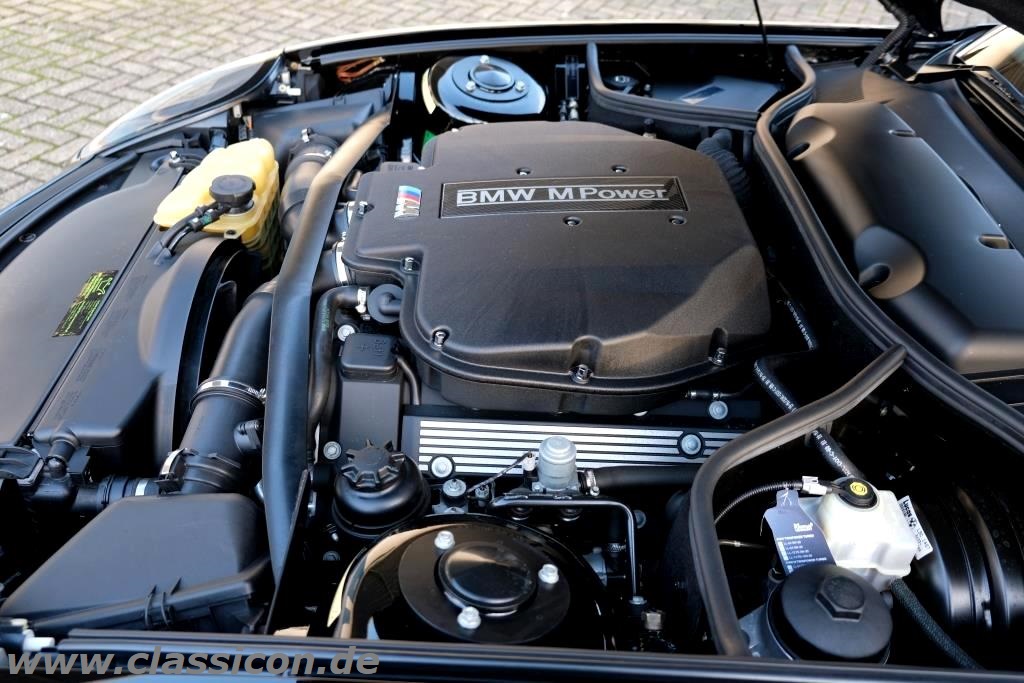
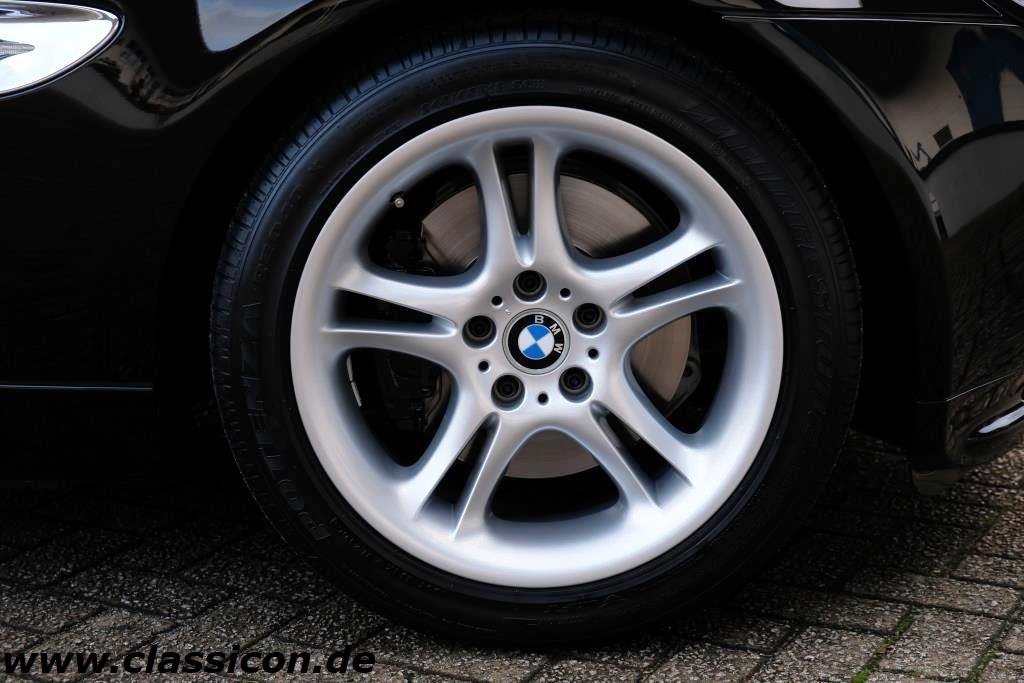
The body of the two-seater is made in spaceframe technology as a self-supporting aluminium frame with a bolted-on outer skin and PU bumpers. As a result, the car has an unladen weight of only 1,660 kilos and accelerates from a standstill to 100 km/h in 4.7 seconds with its 400 hp power unit. The 5-litre V8 from the former M5 develops 500 Nm of torque and is coupled to a standard 6-speed manual gearbox that transmits the power to the 18″ rear wheels. At 250 km/h the electronics regulate the propulsion due to factory agreements.


INQUIRY ABOUT THIS VEHICLE

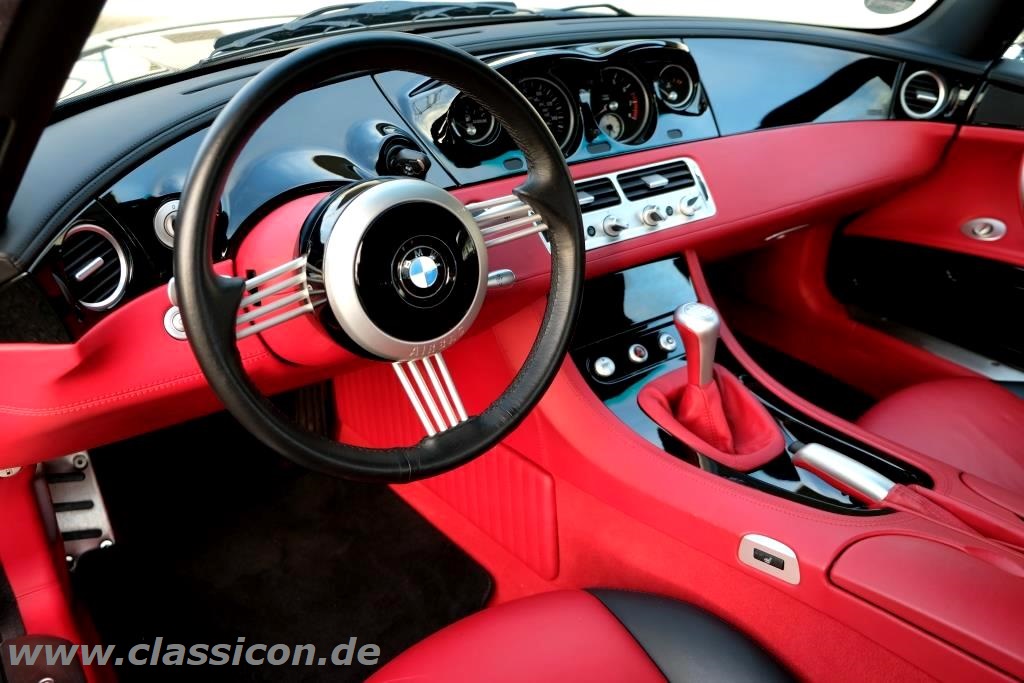
The interior of the Z8 clearly borrows from classic vehicles, such as the steering wheel with thin aluminium struts, the start button or the centrally positioned round instruments of the dashboard. The leather-trimmed seats are electrically adjustable and heated. The soft top is closed manually but servo-assisted, while the tarpaulin is stowed in the boot. The Roadster even offered a hardtop with heated rear window for cold winter days with a corresponding stand in the exclusively available full options package.


INQUIRY ABOUT THIS VEHICLE

This black example with the red/black interior was first registered in the USA in 2001 and re-imported to Germany just 3 years later. According to BMW sources, only 342 units were produced in this rare colour scheme. Only a few of them have a mileage of less than 12,000 kms, like the vehicle offered here, which was used as a show car by a BMW dealer for a long time and received a new service every year. The corresponding receipts of the complete documentation are available. Only recently, a further service and a new MOT inspection were carried out.


INQUIRY ABOUT THIS VEHICLE

In addition to the already very extensive factory equipment, this Z8 also has a stainless steel exhaust system and the Performance Package, so it has all the extras. At best, the Bond car in “The World Is Not Enough” with Pierce Brosnan in the role of the top agent offered more options – but that was painted in the much more frequently produced silver metallic… A black example with this mileage only comes onto the market very rarely!

The Z8 is probably the best retro car ever produced – a dream car with equipment that leaves nothing to be desired and also offers typical BMW performance with the best reliability. Thanks to its meticulous care, this car is in absolute top condition and is an enrichment for every collection with the best value forecast – a modern rarity!

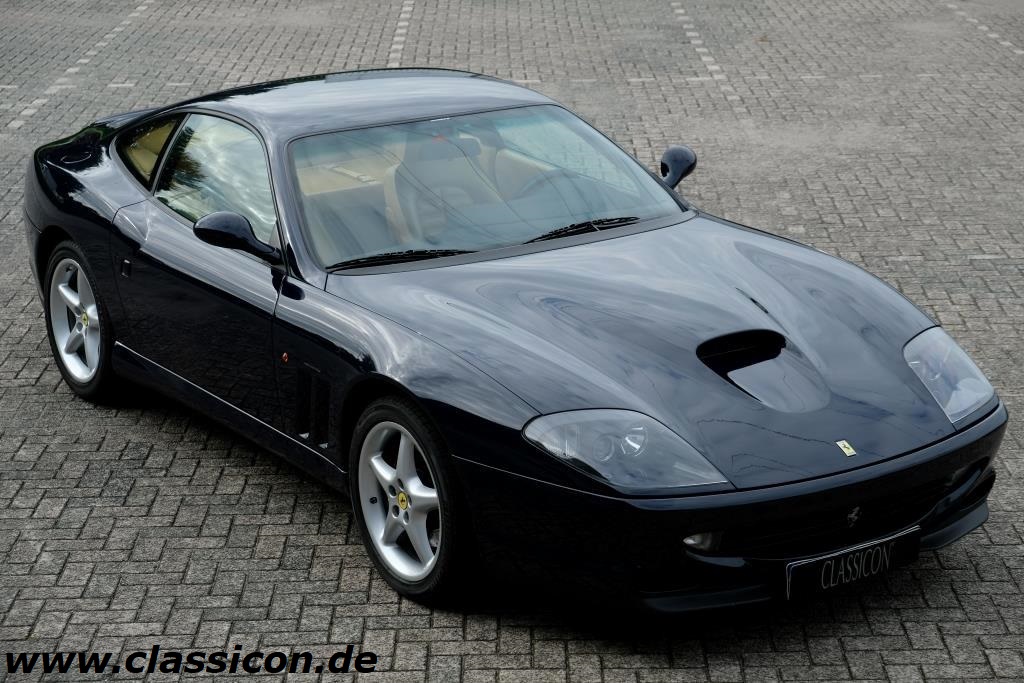
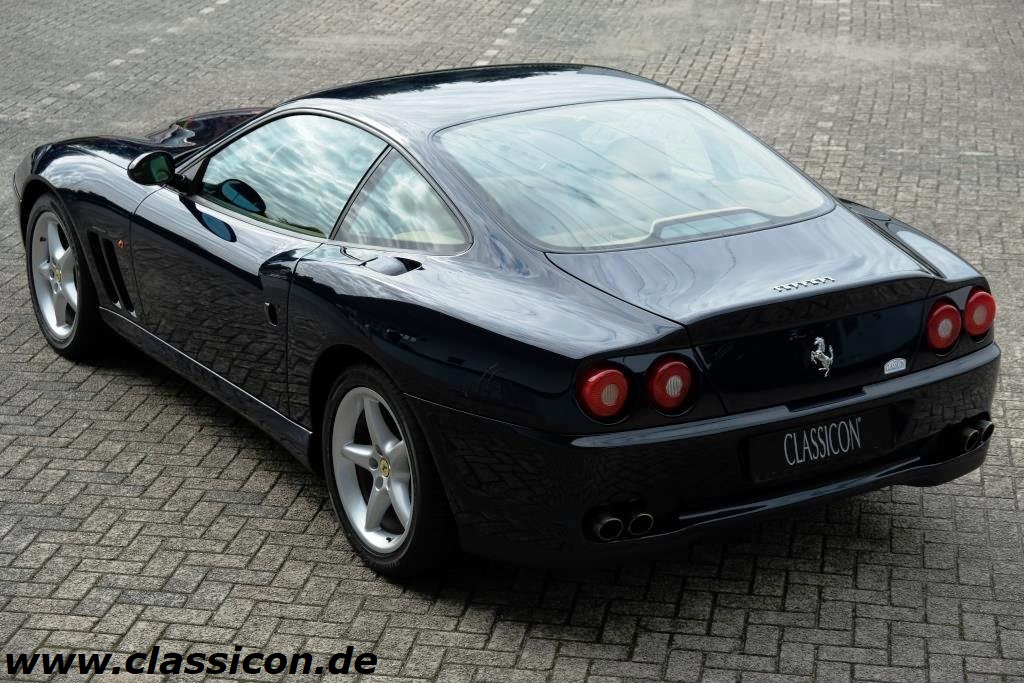
1998 – FERRARI  550 Maranello

Fascinating FERRARI 550 Maranello with 6-speed manual gearbox, complete documentation and 56tkm in very rare colour combination.


INQUIRY ABOUT THIS VEHICLE

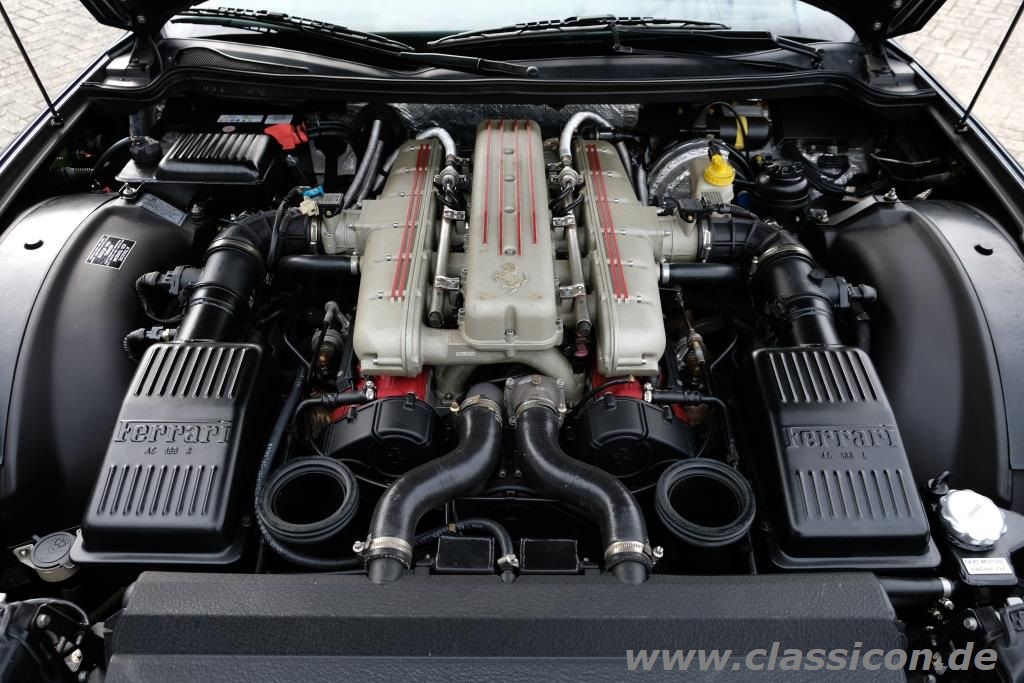
The 550 Maranello presented by Ferrari at the Nürburgring in 1996 amazed and inspired admiration within the assembled experts at the same time with a very successful reinterpretation of the stylistic elements of the in-house classics 250 GTO and 365 Daytona Coupé. Like its two ancestors, the new Gran Turismo was designed as a V12 front-engine GT and generated 485 hp from its 5,474 cc displacement, which was fed to the driving rear axle in transaxle design.


INQUIRY ABOUT THIS VEHICLE

With new technical elements such as ASR, 4-channel ABS, speed-dependent power steering and automatic air conditioning, Ferrari succeeded in building a very fast and comfortable touring car of superior sovereignty. However, of the approximately 3,600 copies of the 550 sold, only a homeopathic few were manufactured in the discreet and very distinguished colour combination of “blu pozzi” paintwork with “tobacco” upholstery – which makes this example particularly desirable…


INQUIRY ABOUT THIS VEHICLE

The vehicle was first delivered in April 1998 via the internationally renowned Garage Franchorchamps in Belgium, where it remained registered as a second owner before – due to its equally attractive and unusual colour scheme – it moved to a small collection in Hamburg. In the metropolis on the Elbe, the car received its third registration and regular journeys along the world-famous Elbchaussee to the Hafencity – which is actually tantamount to self-mortification, since the GT’s strength is travelling fast over long distances…


INQUIRY ABOUT THIS VEHICLE

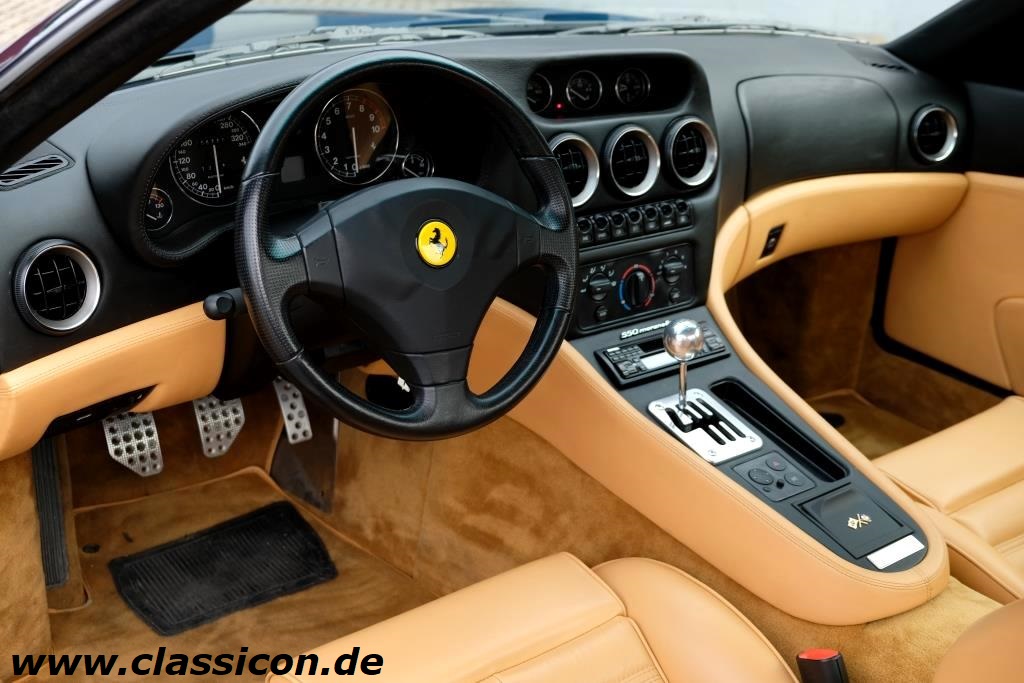
The conventional 6-speed manual gearbox fortunately installed instead of the F1 gearbox makes the dark blue front-engined sports car all the more attractive technically – the open gearshift gate is a relic of the great days of classic GTs! The original – stamped through – on-board folder, the complete on-board tools and invoice documents are present and will be given to the new owner.


INQUIRY ABOUT THIS VEHICLE

The bright interior has just been professionally resealed and provides a very pleasant ambience in the interior, which only makes it harder for the occupants to leave. All mechanical components also make a good impression throughout. The overall condition of this GT is absolutely convincing, with only a slight patina of the years and, with continued good maintenance, will provide the new owner with much driving pleasure for a long time to come.

The 550 Maranello is assured a fitting place in the collector’s car world due to its ravishing design, convincing technical concept and performance potential. Its superiority over a Porsche 996 turbo speaks for itself and will convince even the last doubters. What makes this model special and almost untraceable, however, is its visual appearance, which wraps up the sovereignty of this driving machine in a most discreet manner. The trends of the current market quotations make the purchase of a 550 all the more interesting again.

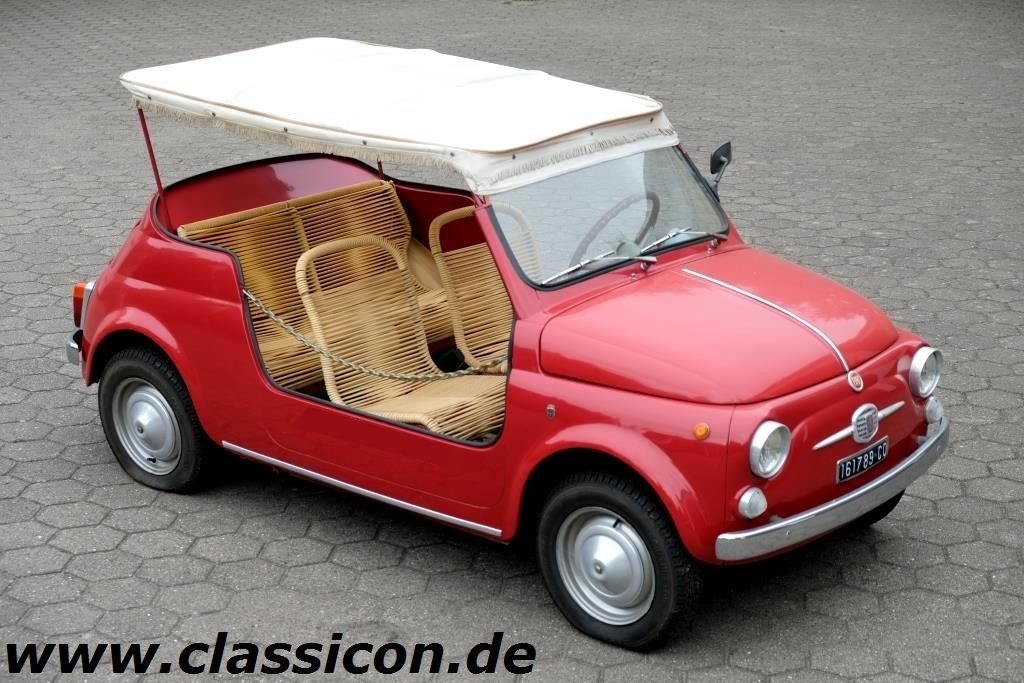
1961 – FIAT  nouva 500 D Jolly

Garage find! Rare FIAT 500D “Jolly” from Ghia in unrestored original condition with only 31tkm mileage from first owner!

1961 - FIAT nouva 500 D Jolly - 01
INQUIRY ABOUT THIS VEHICLE

According to a credible tradition, at the end of the 1950s, none other than Giovanni Agnelli, son of a wealthy Italian industrial aristocracy and at that time already vice-president of FIAT, had the idea of carrying a small beach car on his yacht, which made it easier for him to get from his berth to a hotel or bar. The Carrozzeria Ghia was then commissioned to manufacture the car on the basis of the FIAT 500. Soon this car, christened “Jolly”, became a popular must-have among the rich and beautiful along the world’s fashionable coasts.

1961 - FIAT nouva 500 D Jolly - 04
INQUIRY ABOUT THIS VEHICLE

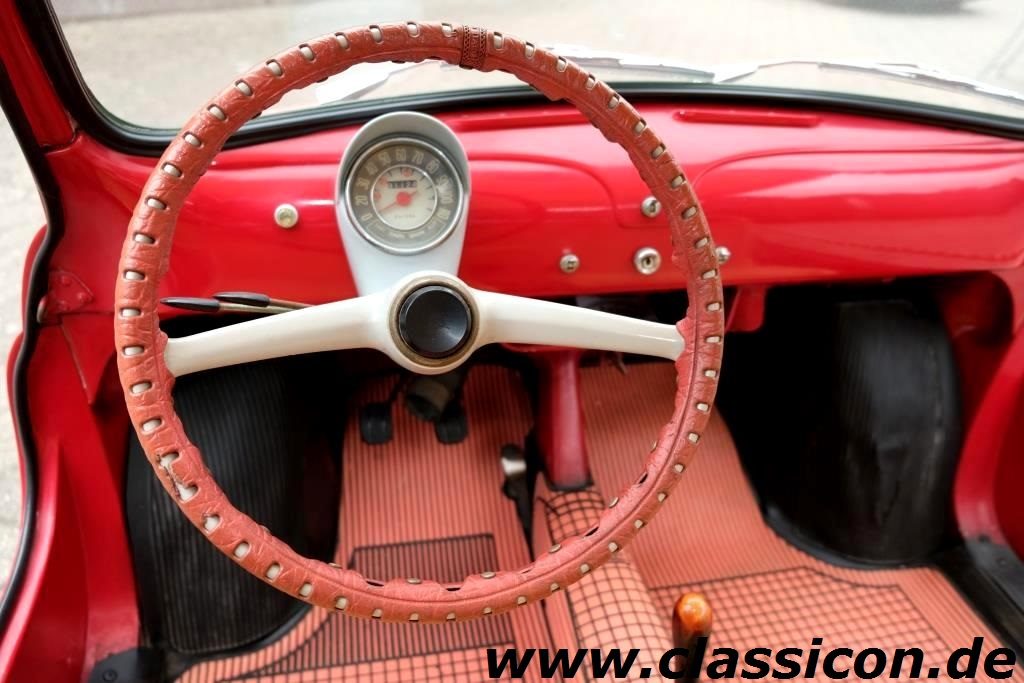
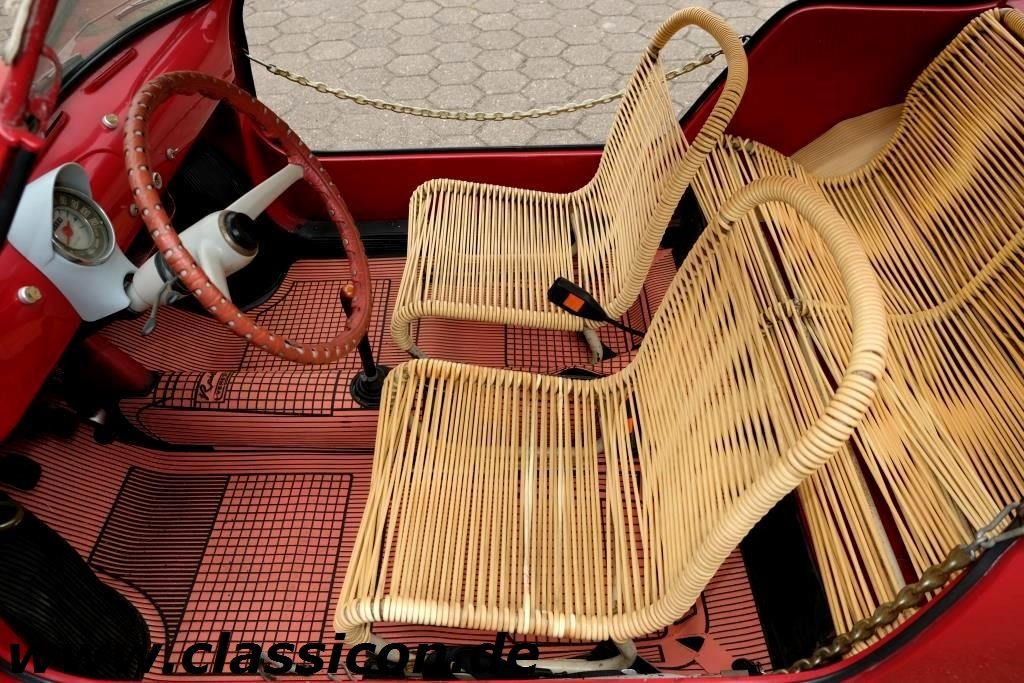
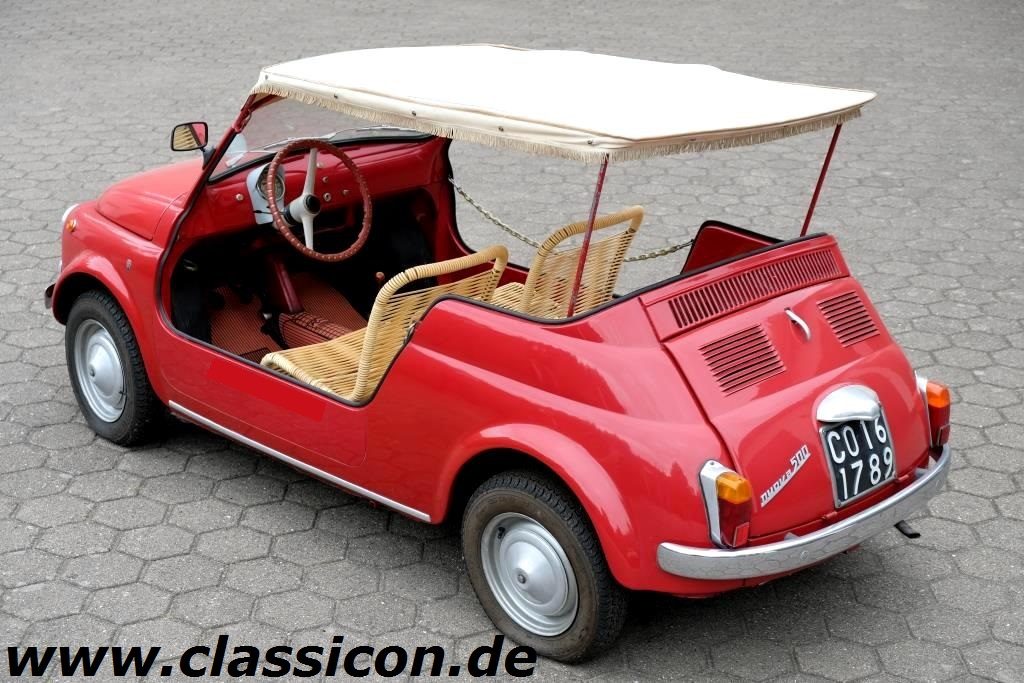
The “Jolly” had no doors, a shortened windscreen and instead of a tin roof a light canopy with fringes mounted on thin poles. The seating was covered with plastic string at the factory, which is much more practical for the planned use near the water… The light and airy car was very popular in jet-set circles and was then produced by Ghia in a small series: 700 copies of the beach car were made – but based on the FIAT 500, the larger 600 and the Multipla together – which makes real “Jollys” an expensive rarity today.

1961 - FIAT nouva 500 D Jolly - 02
INQUIRY ABOUT THIS VEHICLE

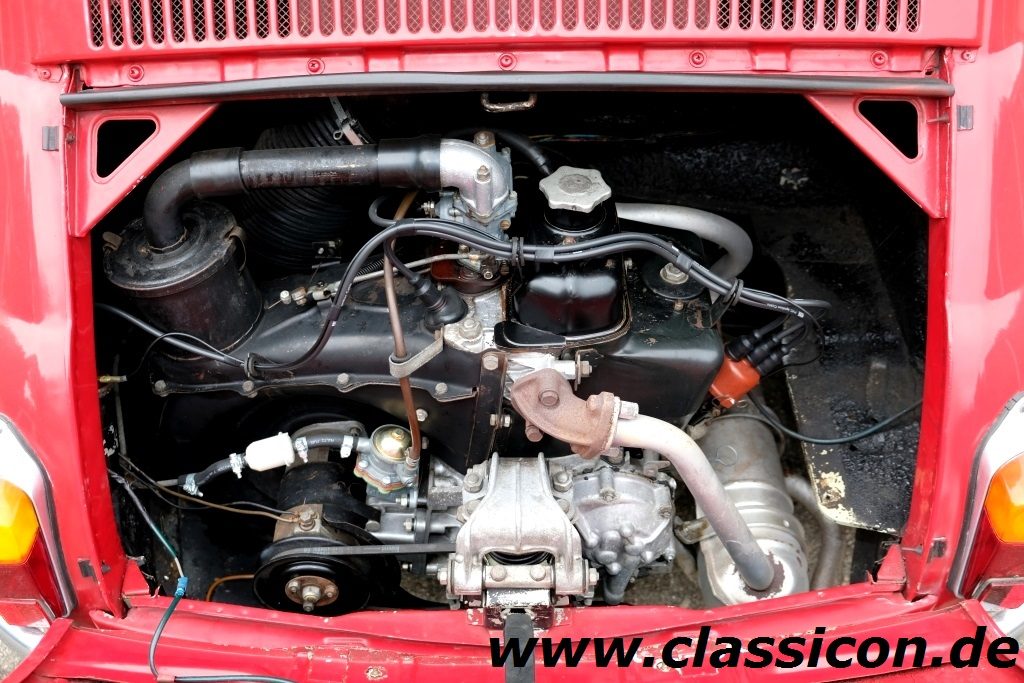
This vehicle is a rare example of the later “economical version” which was only produced between 1964 and 1966 and is from the first Italian possession. After the death of the owner, the vehicle stood unused for several years but was in a garage and is now in its original unrestored condition. The bodywork is in the best possible condition: all panels of the clearly arranged body are still original and solid and furthermore they have been painted with the first coat of paint! The canopy presents itself with the original fabric, but the covering of the seats has been renewed.

1961 - FIAT nouva 500 D Jolly - 20
INQUIRY ABOUT THIS VEHICLE

The 31,124 km read on the speedometer correspond to the original mileage that the Jolly covered with the first engine. The small vehicle is therefore “matching numbers”, which collectors particularly appreciate. The car needs some attention as a garage find: a technical inspection, replacement of the fuel and new tyres are recommendable (or necessary), but generally associated with this model with only low costs. A conservation of the original condition is advisable, also because only few of the jollys might still be unrestored and this authenticity is irretrievable.

1961 - FIAT nouva 500 D Jolly - 40
INQUIRY ABOUT THIS VEHICLE

Numerous replicas of the sympathetic beach car are available on the market – original Ghia vehicles are rarely on offer. According to information from the FIAT archives, this one was delivered to Ghia – like all jollys – after having been manufactured by FIAT at the “Mirafiori” factory in Turin for conversion. After the takeover of Ghia by Ford, all other production documents were lost. It is a very rare opportunity to acquire an original “Jolly”, which should also be an enrichment for established collections.

1967 – FIAT  Dino Spider

Sporty-elegant FIAT Dino Spider with very elaborately overhauled mechanics in “driver” condition suitable for everyday use.


INQUIRY ABOUT THIS VEHICLE

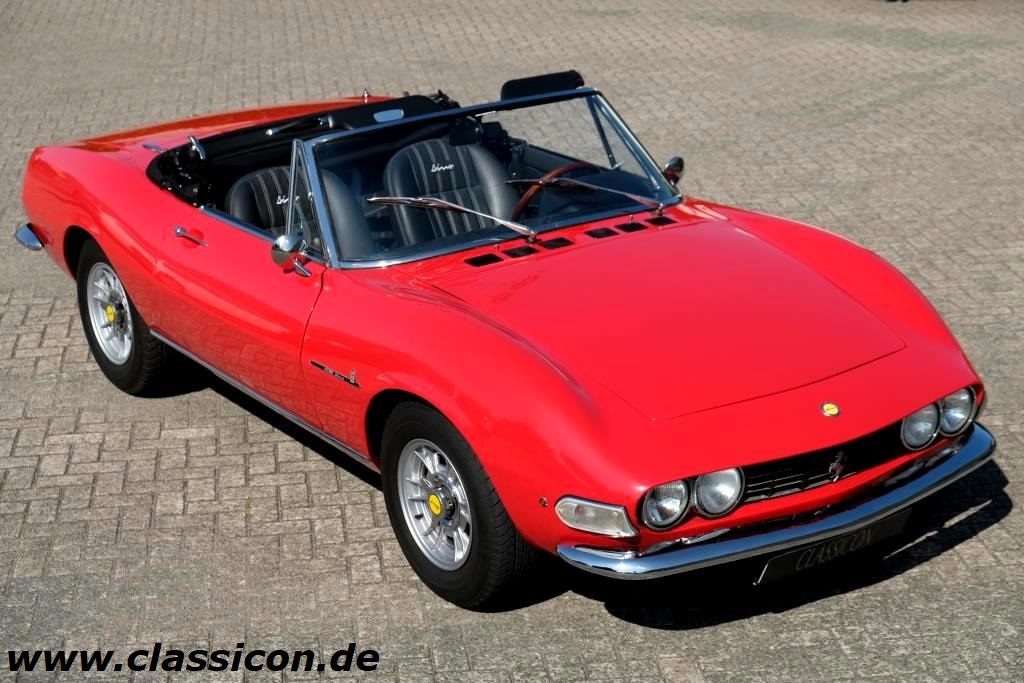
In order to be able to compete in Formula 2, Ferrari had to meet the requirement of selling at least 500 production cars with the identical engine block within one year. In the mid-1960s, however, this was not feasible for the Maranello factory alone. Enzo Ferrari therefore offered his friend Giovanni Agnelli – the boss of FIAT – to use the 2-litre V6 developed by his son Alfredo for his own models as part of a cooperation. Thus Pininfarina received the order from Agnelli for the design of a Spider, the competition from Bertone accordingly received the order to design a coupé with this engine.


INQUIRY ABOUT THIS VEHICLE

Both FIAT Dino models featured the Scuderia’s all-aluminium V6 – in this case producing 160 hp and made suitable for everyday use by the well-known engine designer Aurelio Lampredi. The top speed of the Spider, which debuted in 1966, was 130 mph – impressive for the time! Ferrari was thus able to achieve the necessary number of units for homologation, as both FIAT body variants sold well and were numerically supplemented by the beautiful Dino 206 GT coupé from Ferrari itself, which had the same engine.


INQUIRY ABOUT THIS VEHICLE

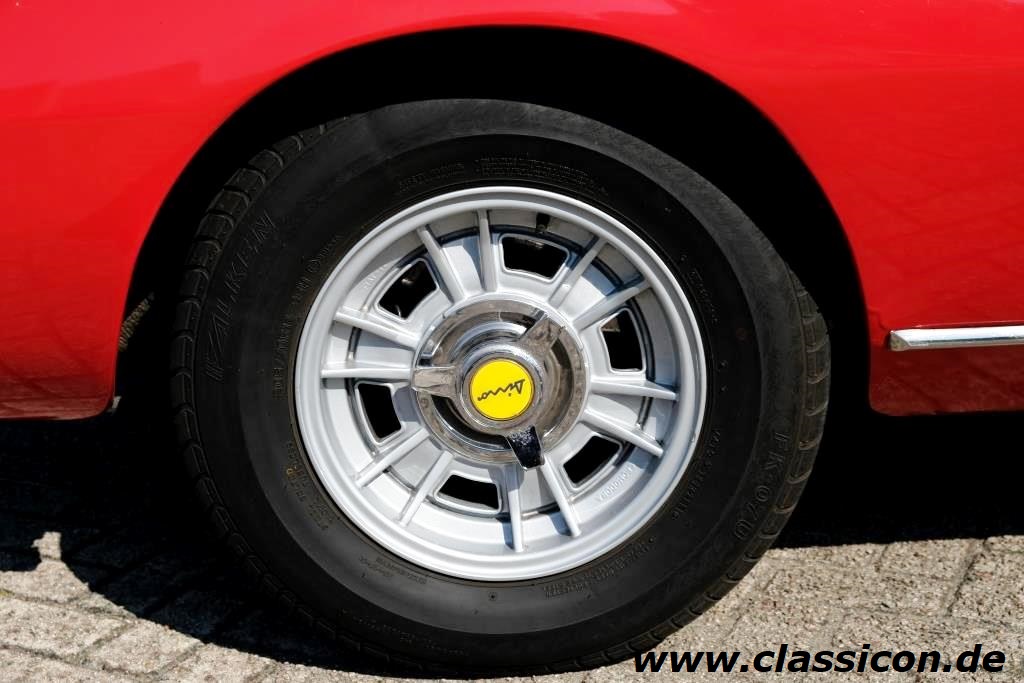
The vehicle on offer was first registered in the United States in 1967 – unfortunately, there is no longer any evidence that Ron Wood of the Rolling Stones was the owner. Much later, the car came from the USA via Holland to Germany, where the owner had a 2.4-litre engine including gearbox and drive train installed by the specialists at DinoParts in 2012 after an extensive overhaul. From 1969 onwards, the larger engine was manufactured from grey cast iron by Ferrari itself in the course of an overhaul and now produced 180 hp in the FIAT models and 195 hp in the Ferrari Dino 246 GT/S.


INQUIRY ABOUT THIS VEHICLE

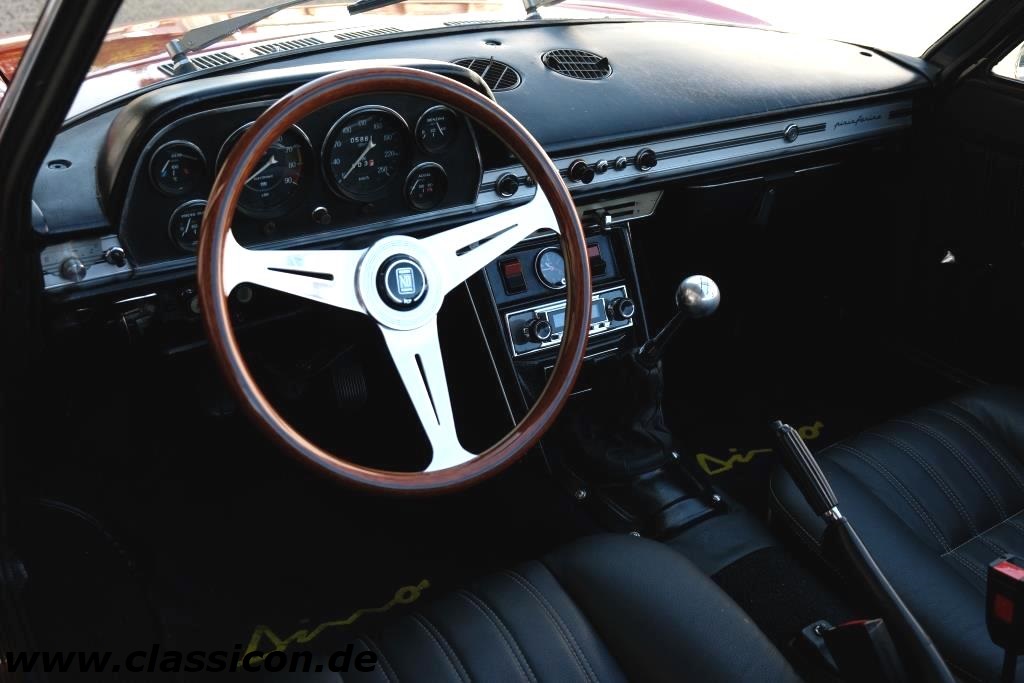
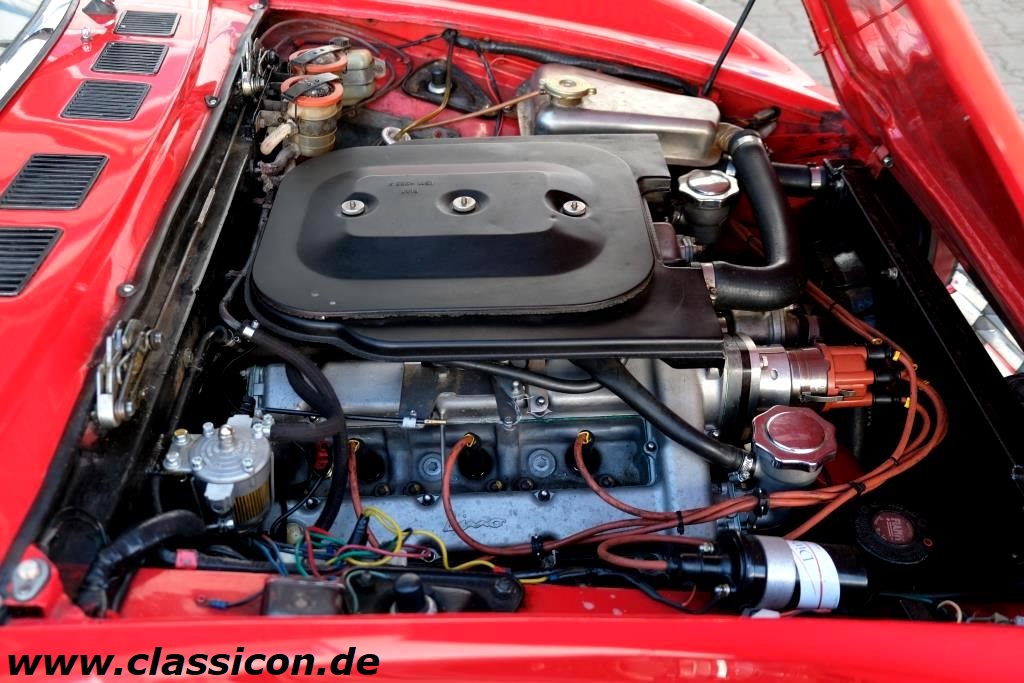
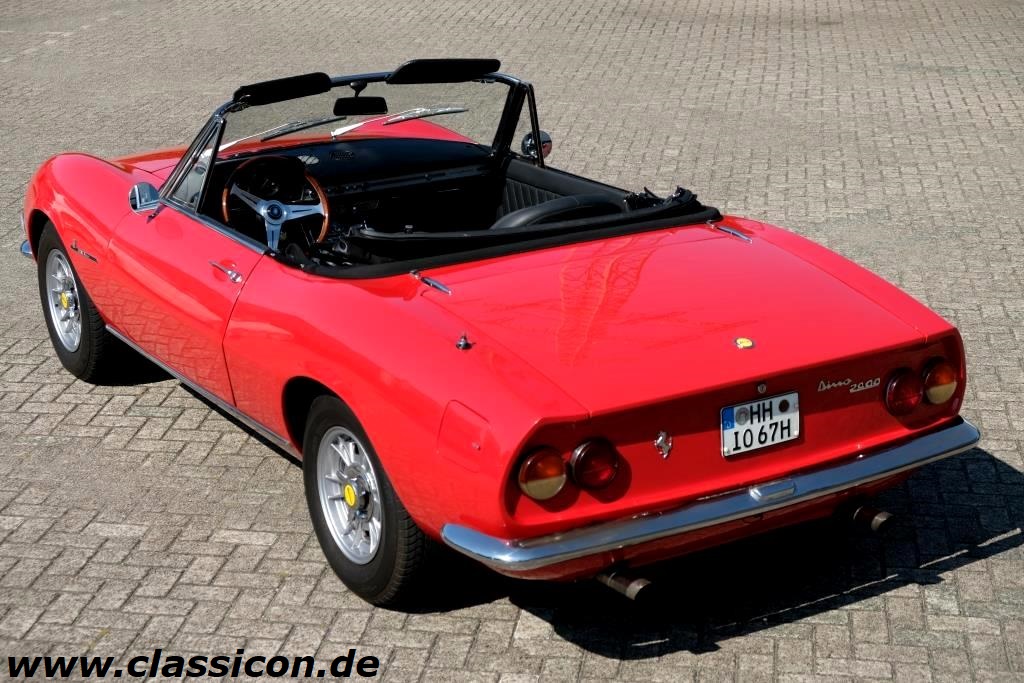
This car has the chassis number -xx525 and is therefore the very last Dino Spider of the first series. It is in a technically extensively overhauled condition and in this state certainly suitable for long journeys. The seat covers, door panels, carpets and also the soft top have been professionally renewed by an upholsterer. The dashboard is dominated by a Nardi wooden steering wheel in front of the six round instruments, while the centre console shows a contemporary radio and the ZF manual gearbox is crowned by an alloy knob.


INQUIRY ABOUT THIS VEHICLE

The paintwork and the stainless steel and chrome trim parts show a distinct patina, so that the car can be ascribed an overall “driver quality” in its as-is condition – with potential for further optimisation. More than EUR 75,000 adds up in the present invoices of the long-time current owner. The vehicle can be registered immediately to its new owner with the historic car number plates already issued and will receive a major service for delivery to. Further work can be carried out if required by individual arrangement.

A Dino Spider is certainly a very exclusive way to drive an open FIAT – the V6 engine with four overhead camshafts from Ferrari makes the model technically highly attractive. Pininfarina’s styling is another example of its exceptional design skills: the athletically curved wings and dynamic front end add considerable overtaking prestige and make the car timelessly beautiful – a combination that is hard to resist…
1966 – ISO  Grifo GL 350

Second built ISO Grifo GL350 with extensive special equipment ex works matching numbers in completely rebuilt condition.


INQUIRY ABOUT THIS VEHICLE

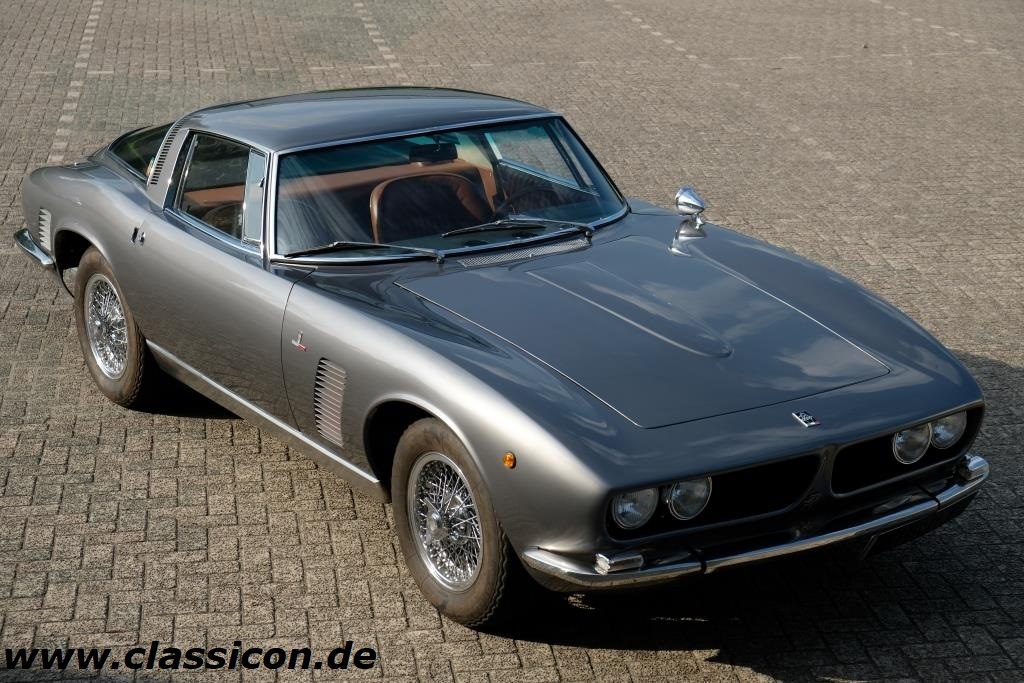
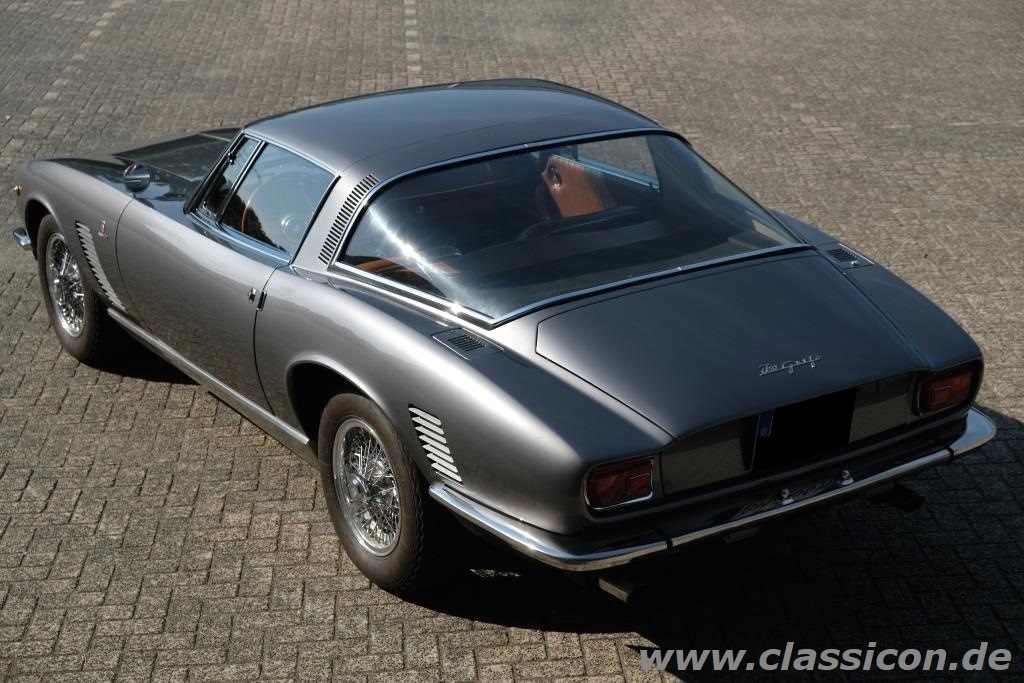
The league of Italian luxury-class GTs was enriched in the mid-1960s by the ISO Grifo, which gave its competitors from Ferrari, Lamborghini and Maserati a run for their money. The design came from the young Giorgio Giugiaro, who was in the employ of Carrozzeria Bertone and created a great design: the hatchback body with the huge panoramic rear window was flat with contoured fenders that had vents front and rear and featured an easily recognizable roll bar – similar to the one-off show car Pininfarina Rondine – the basic features of which the Grifo bore. Undoubtedly a very big hit by one of Italy’s greatest industrial designers.


INQUIRY ABOUT THIS VEHICLE

The engineer Giotto Bizzarrini, who had previously worked for Ferrari and was responsible for the development of the 250 GTO, designed a platform frame with box girders for the two-seater coupé. The technical components, on the other hand, were purchased by ISO: among other things, the engine was initially the V8 small block with 5.4 liters displacement (type “Chevrolet Turbofire”) also used in the Corvette. The disc brakes were supplied by Dunlop and the brake servo by ATE. After the car was presented at the Turin Motor Show at the end of 1963, series production of the Grifo began in 1965, largely unchanged.


INQUIRY ABOUT THIS VEHICLE

This Grifo is the second GL 350 ever produced and was still – as one of about 15 pre-series vehicles – assembled at Bertone. It is designed as a pure two-seater and carries the spare wheel protruding into the interior directly above the rear axle for optimum weight distribution. As a premiere vehicle for Germany, the car was equipped at the factory with special equipment according to the available data sheet:
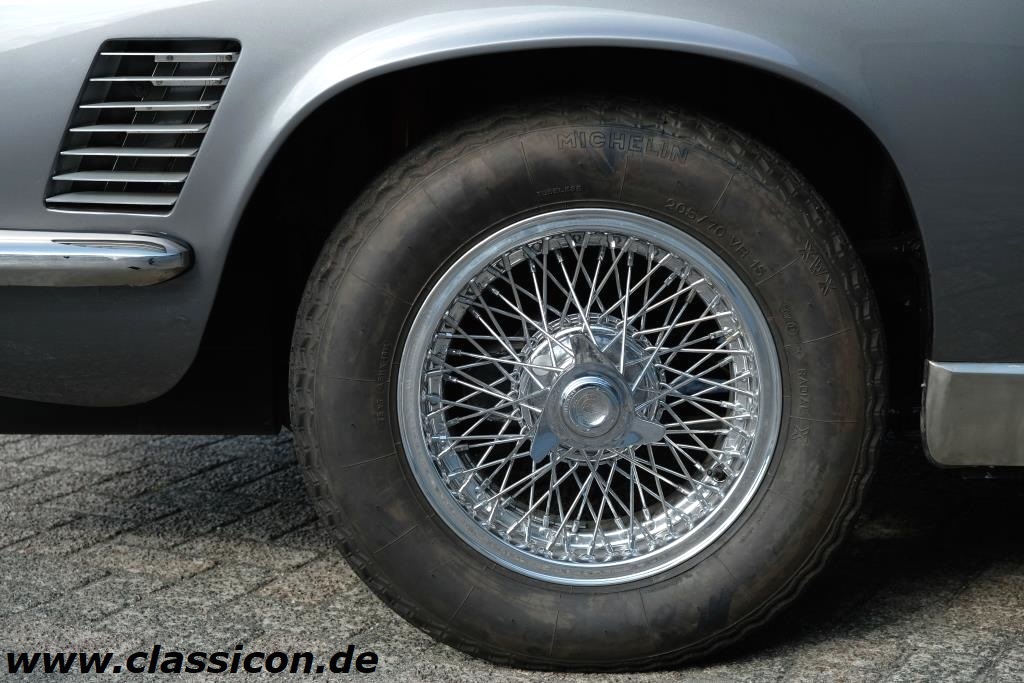
this included, among other things, a more powerful engine, a 5-speed manual transmission from ZF in combination with a long rear axle (2.88 : 1) as well as chrome-plated Borrani spoke wheels and a very rare blue-wedge windshield.


INQUIRY ABOUT THIS VEHICLE

In this configuration, the powertrain allowed a significantly reduced engine speed level and a top speed of 280 km/h! The maximum speed of this GL 350 is 5,800 rpm – making the car virtually predestined for long, fast drives. The chassis, devised by chassis specialist Bizzarrini, had trapezoidal wishbones at the front and a De-Dion rigid axle with wading linkage and thrust struts at the rear. Not only the contemporary car enthusiast John Bolster, but also his colleague Reinhart Seifert from the editorial staff of “auto, motor & sport” ranked the ISO Grifo among the best cars in the world…

INQUIRY ABOUT THIS VEHICLE

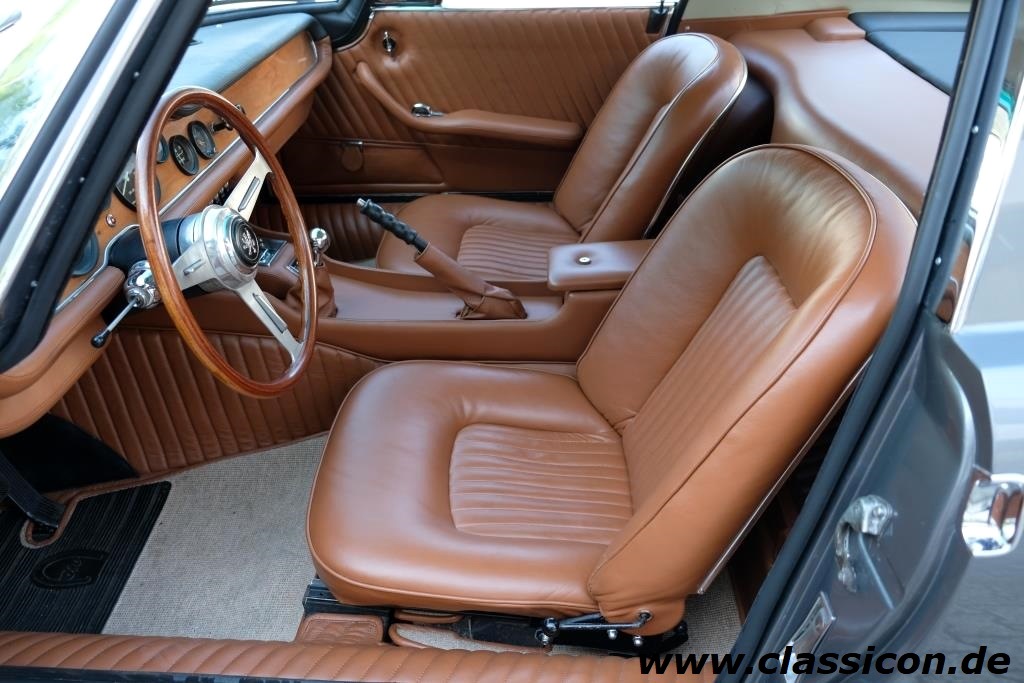
Over the years, this vehicle found its way to Sweden, where a well-known ISO collector acquired it in 2011 in Stockholm. In 2014, the latter began a complete restoration, which was carried out to a very high standard and completed in the early summer of 2021. As a reference car, his accident-free example in first-class original condition from the former Monteverdi collection was available for the rebuild. Thus, even the filigree front section of the car is manufactured exactly according to the original, which is not the case with numerous restored vehicles. With the chosen color combination, attention has also been paid to the smallest details in the interior: so the leather in the original ISO color “havana” is made in glossy patinated leather and the backrest leather with punching according to the original Bertone pattern.

The Grifo is certainly one of the most attractive coupés of its time and for years has always been a highlight at international events. The opportunity to acquire such an elaborately and detailed rebuilt example is very rare – especially from a limited pre-series still produced as a pure two-seater and as a premiere vehicle for the largest sales market with special extras. Take the opportunity!

1954 – JAGUAR  XK 120 DHC

Very elaborately restored JAGUAR XK 120 DHC “matching numbers” with documentation and sensible optimisations in top condition.


INQUIRY ABOUT THIS VEHICLE

Without doubt, the XK 120 created by Jaguar founder William Lyons is one of the most beautiful vehicles in automotive history and still fascinates a large audience worldwide more than 70 years after its presentation at the “London Motor Show”. The newly designed six-cylinder in-line engine with a displacement of 3.5 litres allowed a top speed of 200 km/h – which was considered sensational at the time – while at the same time ensuring the reliability of the unit, which was still built in its basic form until the late 1990s!

1954 - JAGUAR Xk 120 DHC - 03
INQUIRY ABOUT THIS VEHICLE

The Cabriolet version shown here (drop head coupe) shown here was built for only one year from 1953 to 1954 and is the rarest version of the XK with 1,767 units. This vehicle was produced in April 1954 and delivered to a concessionaire in California. After importation from the USA, it underwent a professional full restoration in Germany, during which all assemblies were renewed and which lasted over ten years. A photo documentation of this work is available. In 2013, the vehicle was registered to the only holder in Germany to date.

1954 - JAGUAR Xk 120 DHC - 16
INQUIRY ABOUT THIS VEHICLE

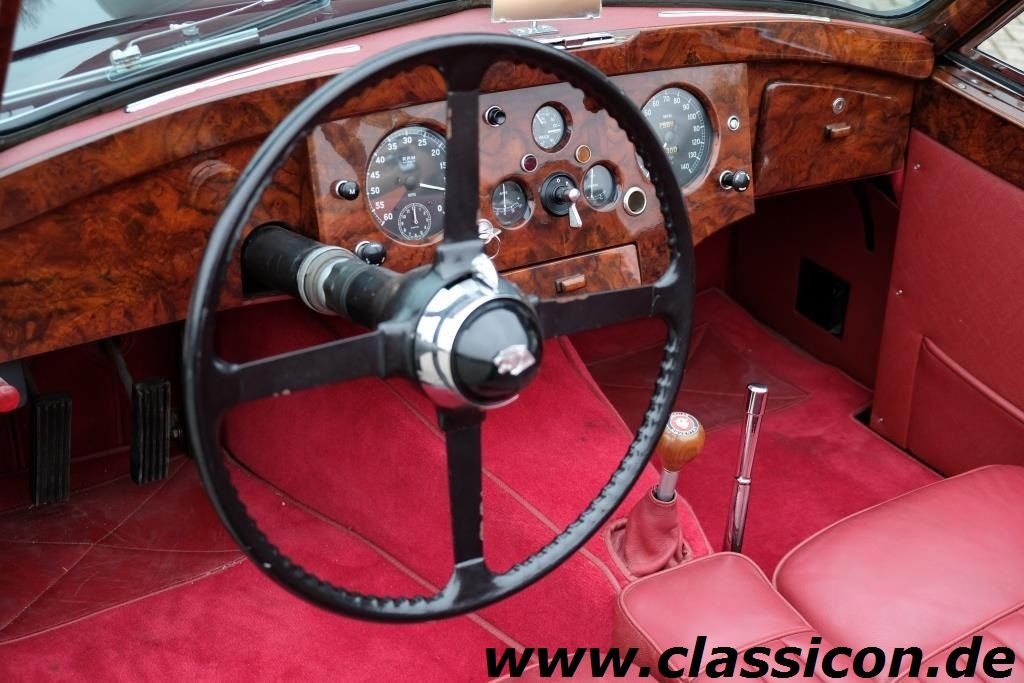
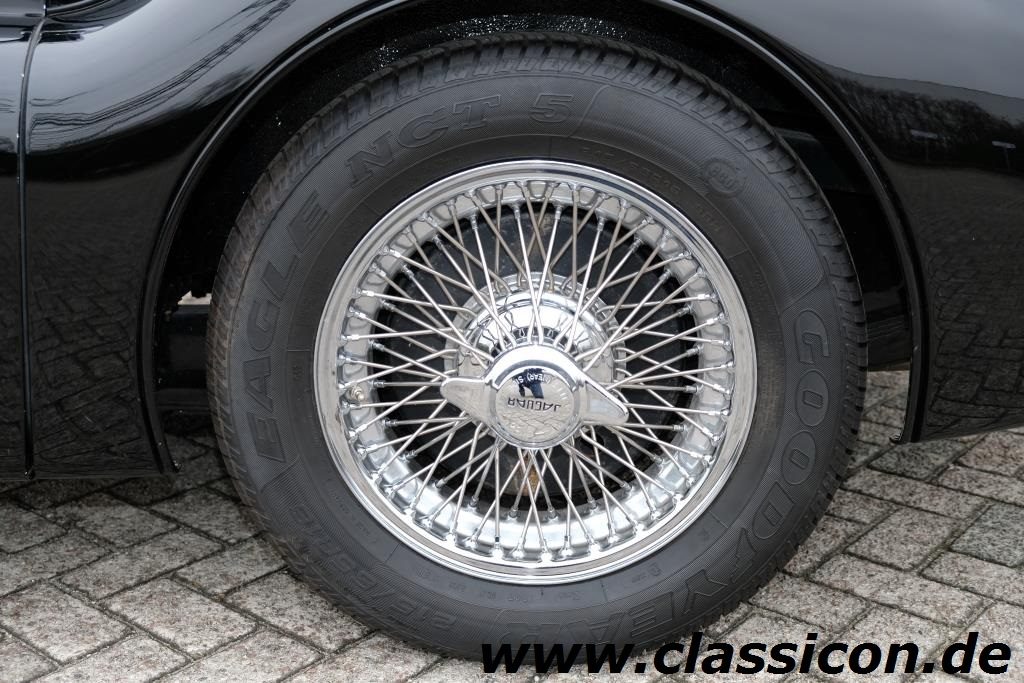
During the restoration, the XK received sensible technical improvements that further increase the driving pleasure, such as disc brakes on the front axle with big brake calipers by Coopercraft, a 5-speed gearbox from Getrag, gas pressure shock absorbers and a performance-enhanced cylinder head. This allows for easy shifting and effective braking with optimized road holding! The equipment also includes a stainless steel exhaust system and 16″ chrome spoke wheels by Dayton. Unlike the roadster (OTS), the DHC has a lined fabric soft top and extensive burl wood trim to make driving more comfortable.


INQUIRY ABOUT THIS VEHICLE

Owned by the art professor who commissioned the restoration of the car, the XK has driven less than 1,000 kms since completion due to lack of time to date. The Drop Head Coupé therefore has only barely visible traces of use and is still technically in mint condition: the quality of the restoration is evident in every detail. For delivery, the XK receives a new MOT inspection, so that the car is immediately ready for registration, as well as a new service at a renowned Jaguar specialist. At the same time, the Jaguar is also suitable for long journeys due to the optimizations.


INQUIRY ABOUT THIS VEHICLE

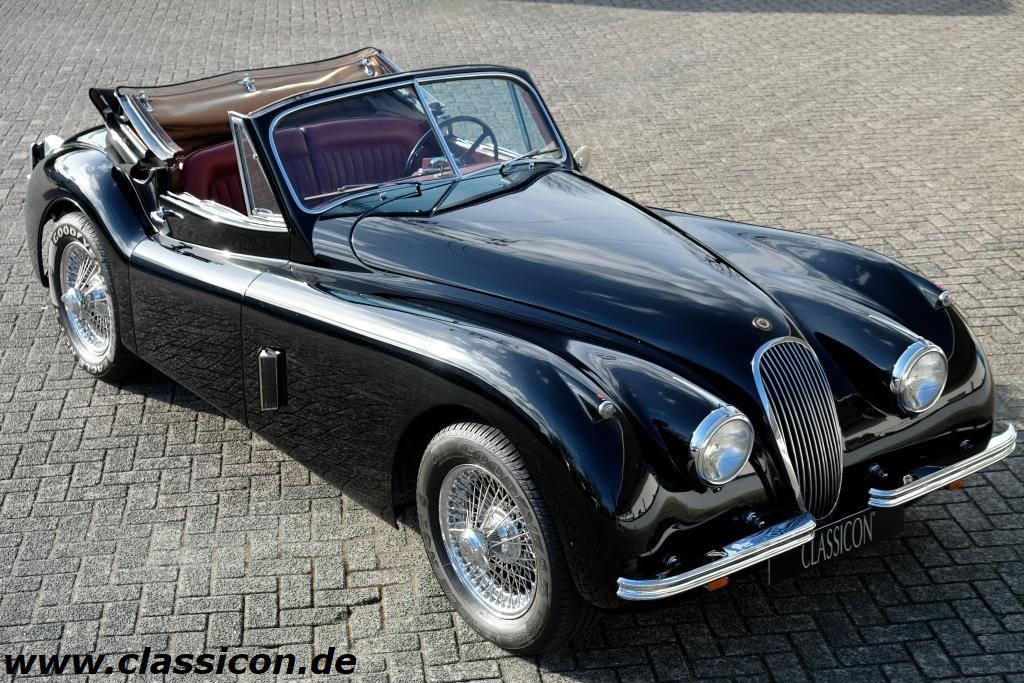
According to the Jaguar Heritage Trust Certificate, the genuine colour scheme of the car was the popular “birch grey” of the time, which was changed to plain black during the rebuild at the customer’s request and combined with the original red leather interior and tinted windows. The classically elegant colour combination suits the XK extremely well and makes it appear timelessly beautiful. The flatness and the gap dimensions of the body components are flawless, which is very eye-catching, especially with the chosen paint finish, and underlines the quality of the work carried out!

This XK 120 meets all the requirements of a classic car enthusiast: it not only impresses with its undeniable beauty of form and technical reliability, but also offers optimized driving characteristics that make driving a real pleasure. As a rare cabriolet version, the Jaguar is also an option for advanced collectors – or for beginners looking for an alternative investment. But above all it is a feast for the eyes!

1961 – JAGUAR  E-Type 3,8 Roadster

Rare JAGUAR E-Type 3.8 “flat floor” roadster in triple black with tinted glass, chrome spoke wheels, hardtop and original engine.


INQUIRY ABOUT THIS VEHICLE

Even Enzo Ferrari, who is recognised as having built many of the most fascinating sports cars in history, called the Jaguar E-Type “the most beautiful car in the world”. When the car was released in 1961, it was simply a breathtaking sensation and today is undisputedly one of the most popular classics ever! Few cars have achieved such an aura as the brand-internal successor to the XK model, which had previously been extremely successful – even on international race tracks…


INQUIRY ABOUT THIS VEHICLE

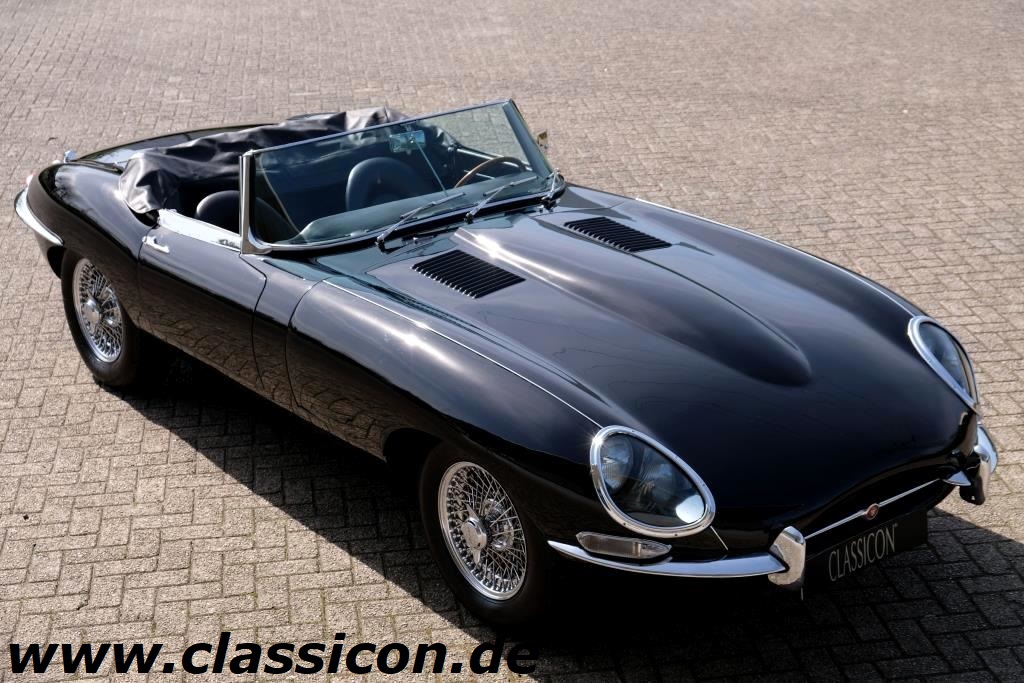
This vehicle was produced according to the Jaguar certificate on December 8, 1961 and is therefore one of the so-called “flatfloor” specimens which are today increasingly sought after by collectors and which are particularly appreciated. The E-Type was delivered to its first owner in the USA via Jaguar Cars New York. According to available documents it is the only roadster of the early first series which was produced in “triple black” (paint, upholstery and soft top in “black”)! The Jaguar also has a black hardtop.


INQUIRY ABOUT THIS VEHICLE

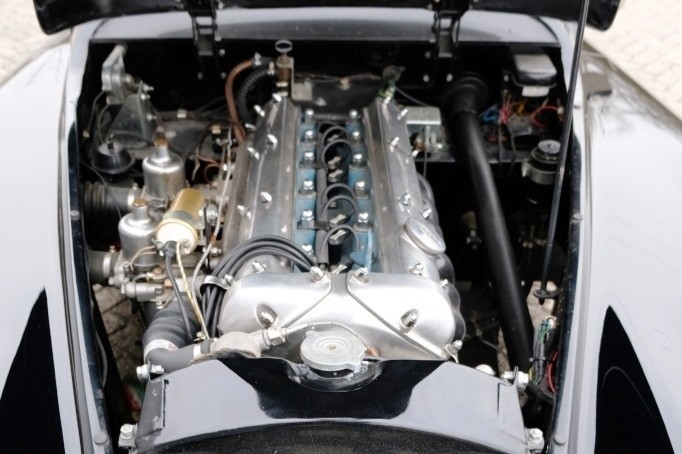
Already in the summer of 1996 the current owner bought the E-Type in California through a friend of the first owner and imported the OTS to Germany, where it was part of his sports car collection for a long time and was occasionally moved. The original “matching number” engine was dismantled for overhaul and replaced by a completely rebuilt, model-correct engine from the Oldtimer Veterans Shop – invoice available. The original engine is still present (but not installed) and is included in the delivery!


INQUIRY ABOUT THIS VEHICLE

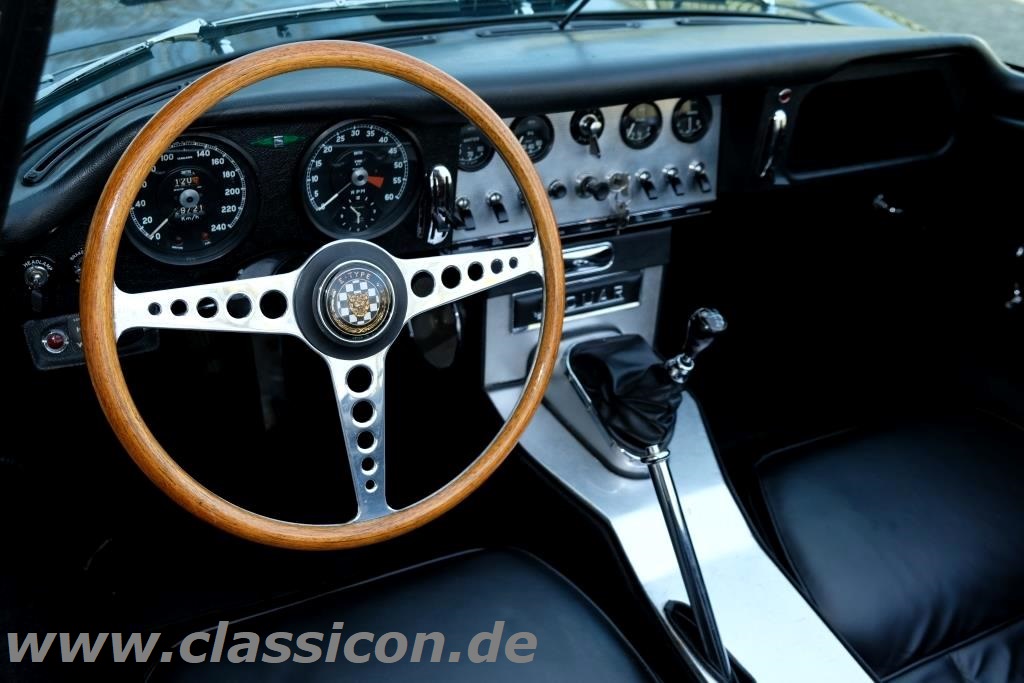
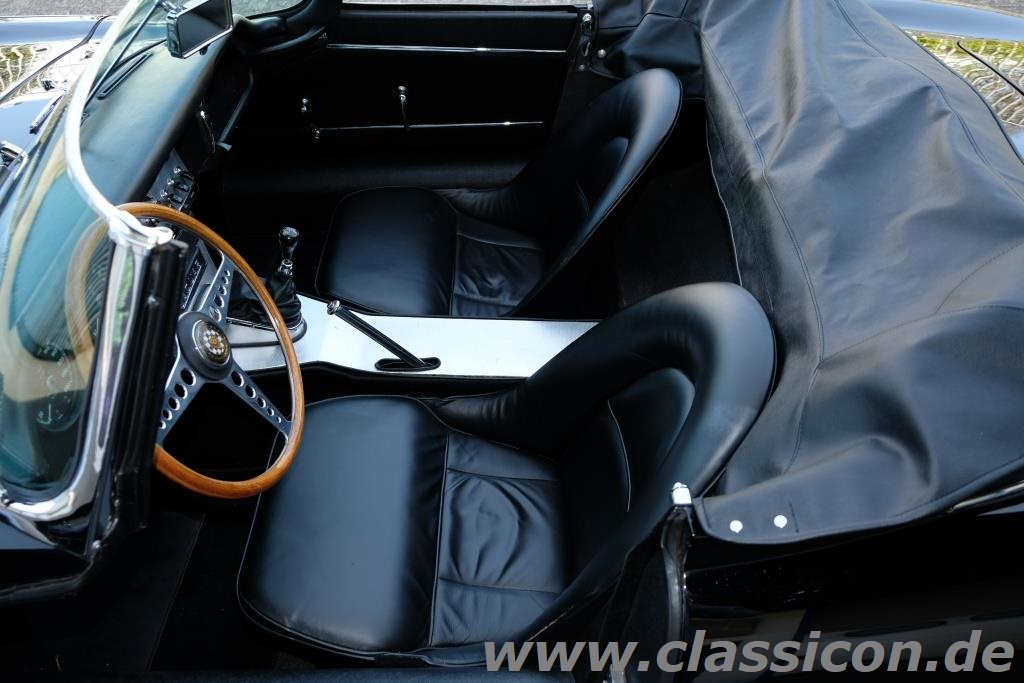
The interior has been completely renewed from a well-known address in Hamburg: with original (head-dyed) Connolly leather for the seats, the right upholstery material for the sills etc. and new carpets in factory finish. The original Everflex was used for the renewal of the soft top and the tarpaulin – it couldn’t be more harmonious! The seats have been tilted in such a way that you can sit and drive this “flat floor” roadster with normal stature! Also the somewhat thicker wooden steering wheel of the early examples is still mounted in this E-Type!


INQUIRY ABOUT THIS VEHICLE

It was not until 2016 that a TÜV full acceptance including H-plate acceptance for approval in Germany took place. This was of course unproblematic for the very original “california black plate” vehicle, whose body is in substantially the best condition and only received a new paint job 28 years ago. Since then, the Jaguar has been driven regularly and has undergone continuous small optimizations, the most recent of which was a new tire (Michelin XWX). The dimensions of the tyres have been improved to 205/70 VR15 and the corresponding additional expert opinions have been recorded in the documents.

This E-Type is an absolute rarity as a former “flat floor” roadster from 1961 with all its beautiful details and due to its condition, its unique colour combination according to Jaguar documents as well as the existing original engine and a hardtop, it is a highly interesting offer for Jaguar enthusiasts who see their vehicle as both a pleasure and an investment. Such an opportunity is very rarely available on the market!